Alberta farmers face split harvest: central regions see 23% above average yields, northeast declares disaster
Rain in June rescued crops across central Alberta, but northeastern areas received 600+ millimetres and declared agricultural disasters due to excess moisture.
The day's top stories, food & events — every morning at 7. Unsubscribe anytime.
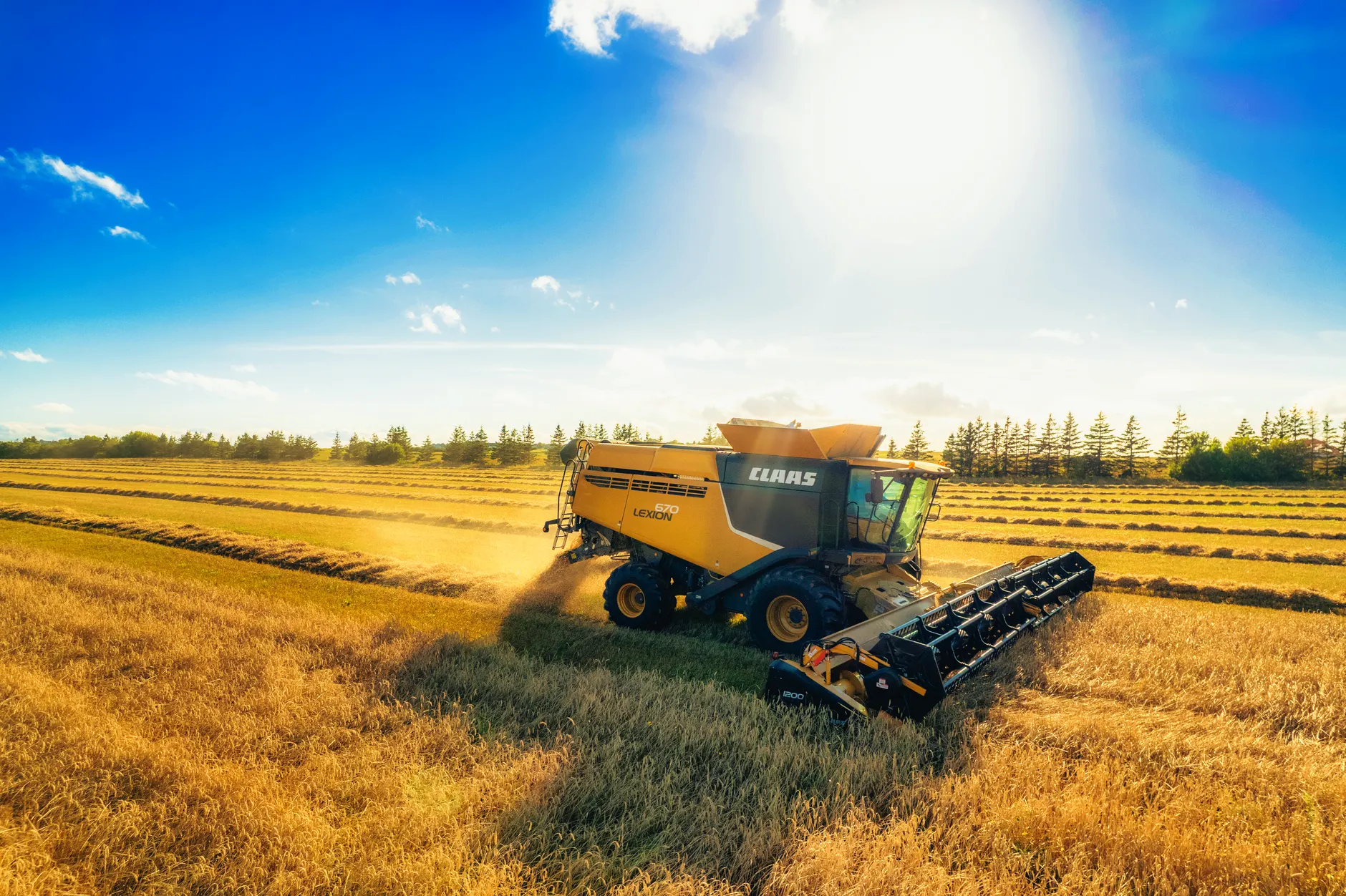
Alberta's harvest is shaping up as a tale of two very different growing seasons. Central Alberta is on track for major crop yields 23 per cent above the five-year average — and 20 per cent above the provincial average — after rain in June rescued what initially looked like another dry season. But northeastern Alberta saw roughly 600 millimetres of rainfall during the growing season, pushing nine municipalities to declare agricultural states of disaster due to excessive moisture.
Kevin Bender, a grain farmer west of Sylvan Lake who works 1,300 acres with his family, was among those rescued by the June rains. "If we hadn't gotten it, then it would have gone the other way," he said. "That rain in June really made the difference." For Bender, the past three years have been a roller coaster: 2024 was his worst production year on record, 2025 his best ever, and 2026 he expects will land above average.
David Lee, manager of Agriculture and Agri-Food Canada's National AgroClimate Information Service, characterized the moisture as good news for some farmers but catastrophic in the northeast. "We're seeing areas there that are 175 to 200 per cent above normal amounts of precipitation, which is certainly abnormal," Lee said. As of August 21, nine municipalities had declared agricultural disasters, including Beaver County, Westlock County, and Sturgeon County in northern Alberta, and central Wetaskiwin County.
Jason Lenz, a farmer southwest of Bentley and member of the Alberta Canola board, said the real story is simply that there has been more rainfall than in recent years, though he acknowledged the pain for producers in areas where fields were drowned out or left unseeded. "Definitely, sorry to hear that when you talk to some of your farmer friends in those areas," Lenz said.
Dwayne Kalinski, a grain and cattle producer in the Bonnyville area, is one of those affected farmers. "We must have prayed too hard, and we got a little too much moisture. Like a lot too much this year," he said. Lee noted that while conditions could still change with heavy rainfall, Environment Canada's forecast calls for normal precipitation and above-normal temperatures through November, which should allow harvest to proceed well overall.
By the numbers
How much above average are central Alberta crop yields this year?
Central Alberta is on track for crop yields 23 per cent above the five-year average and 20 per cent above the provincial average in 2026.
How many municipalities in northeastern Alberta declared agricultural disasters?
As of August 21, 2026, nine municipalities in Alberta had declared agricultural disasters, including Beaver County, Westlock County, Sturgeon County, and central Wetalkiwin County.
How much rainfall did northeastern Alberta receive during the growing season?
Northeastern Alberta received roughly 600 millimetres of rainfall during the 2026 growing season, with some areas experiencing 175 to 200 per cent above normal precipitation.
