How to Listen to John Coltrane Without the Intimidation
Saxophonist Yannick Rieu offers three entry points into the jazz titan's revolutionary work as Montreal celebrates Coltrane's centennial.
The day's top stories, food & events — every morning at 7. Unsubscribe anytime.
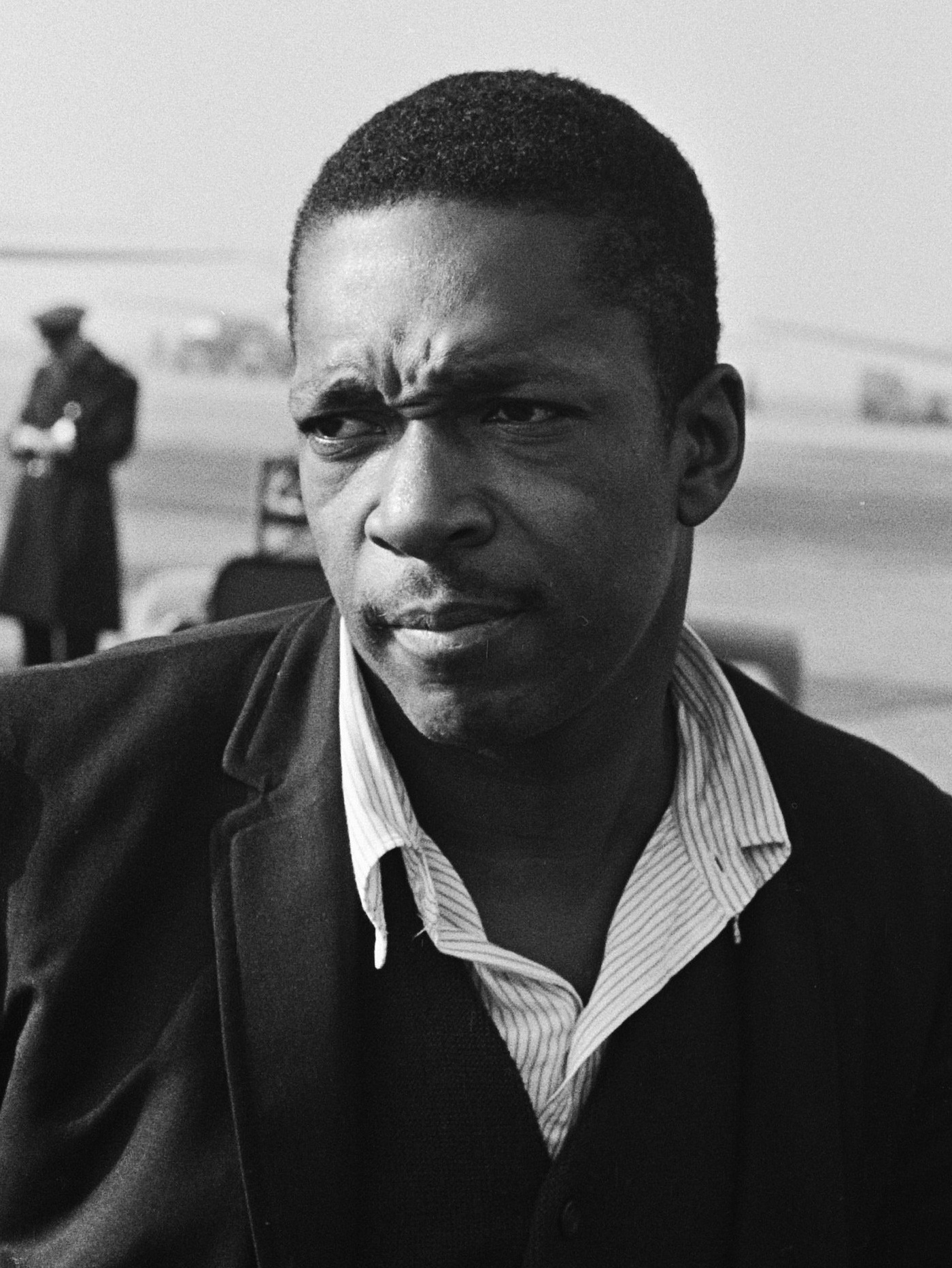
This year marks the 100th anniversary of John Coltrane's birth, and Montreal's Jazz Festival is honoring the saxophonist with a full programming slate. But Coltrane can feel daunting — a musical giant whose four decades' worth of evolution happened in a single hyperintense decade before his death in 1967 at 40.
Yannick Rieu, a saxophonist performing his own Coltrane tribute at the festival's Dièse Onze venue, has long grappled with how to make that music accessible. In an interview, he laid out why Coltrane intimidates and how to let the work speak for itself.
"He lived the life of four, five, or six musicians," Rieu says of Coltrane. "He changed the course of things." But that radical evolution — the way his sound grew rawer and more abstract as the years went on — is precisely what makes him seem unreachable.
Rieu's own first encounter proved this. Around 16, a friend sold him a Coltrane album, something in the hard bop vein. "I didn't understand anything," he recalls. The sound was too raw, too unadorned. "Coltrane wasn't enveloping you like Stan Getz does," Rieu says. "Coltrane was crude. Maybe too crude for my age."
A year later, he tried again. "A whole world opened," he says. That second exposure became the kick he needed to pursue improvisation seriously in his early twenties.
So how do you unlock Coltrane now? Rieu's advice: stop trying to understand. "Are you going to approach a sunset or a rainbow?" he asks. Understanding, he believes, gets in the way of listening. "When you try to understand, you're not listening. It's all a question of inner availability. You make yourself available, absorb what's happening without expectations. You listen and you're quiet, you stop thinking. It's so simple it becomes hard to do."
Understanding can come later, or not at all. "Eventually, if you want. And you're not even obliged."
For those ready to dive in, Rieu suggests three entry points. Start with Ballads, a 1961 album Coltrane recorded with his "classic" quartet — McCoy Tyner on piano, Jimmy Garrison on bass, Elvin Jones on drums. "It's melodic, it's magnificent, and it's incredibly classy," Rieu says. At eight tracks with only one exceeding five minutes, it feels manageable, even gentle.
Next, try Duke Ellington & John Coltrane, another restrained session full of nuance, even when Coltrane dares unusual tempos.
The third entry point comes later in his catalog, but Rieu's offering these as a path, not a prescription.
