Minions steal the show in a love letter to cinema's golden age and monster movie chaos
Director Pierre Coffin's third Minions film riffs on Hollywood history with visual splendour that outshines its threadbare plot.
The day's top stories, food & events — every morning at 7. Unsubscribe anytime.
Pierre Coffin's "Minions and Monsters" opens with a clever conceit: the Universal logo rewinds through decades of design iterations, landing on the 1920s, before the Illumination branding and those familiar yellow pills appear. The message is unmissable — the Minions are about to tell us about cinema's golden age, and they claim to have been there all along.
It's a cracking idea. But an idea alone doesn't carry a film. This seventh installment in the "Despicable Me" universe — the third featuring the Minions as leads — is visually stunning (a franchise constant) yet narratively slack. The story is serviceable, rhythmic, and burlesque, but it amounts mostly to scaffolding for gags, anecdotes, and references that land differently depending on your age.
The premise: three Minions with artistic aspirations (James, Henry, and Ed) accidentally become stars in Hollywood while searching for a new villain to serve. Their ascent spirals into obsession, their descent releases monsters that endanger the planet, and our yellow heroes scramble to save the day. The connective tissue is thin.
Coffin's love of cinema — from "Lumière's L'Arroseur Arrosé" and "A Trip to the Moon" through "The Day the Earth Stood Still," "Jaws," and "The Blob" — saturates every frame. George Lucas makes a cameo. References zip past at velocities that sail clean over children's heads (a Lovecraft nod to Cthulhu will land exactly nowhere with the under-10 crowd), though adults hunting for Easter eggs will be entertained.
The animation is the film's true triumph. A horse-and-train chase sequence in the desert is jaw-dropping. Across the board, colours explode, textures deepen, details obsess, and creatures mesmerize. It's gorgeous to watch.
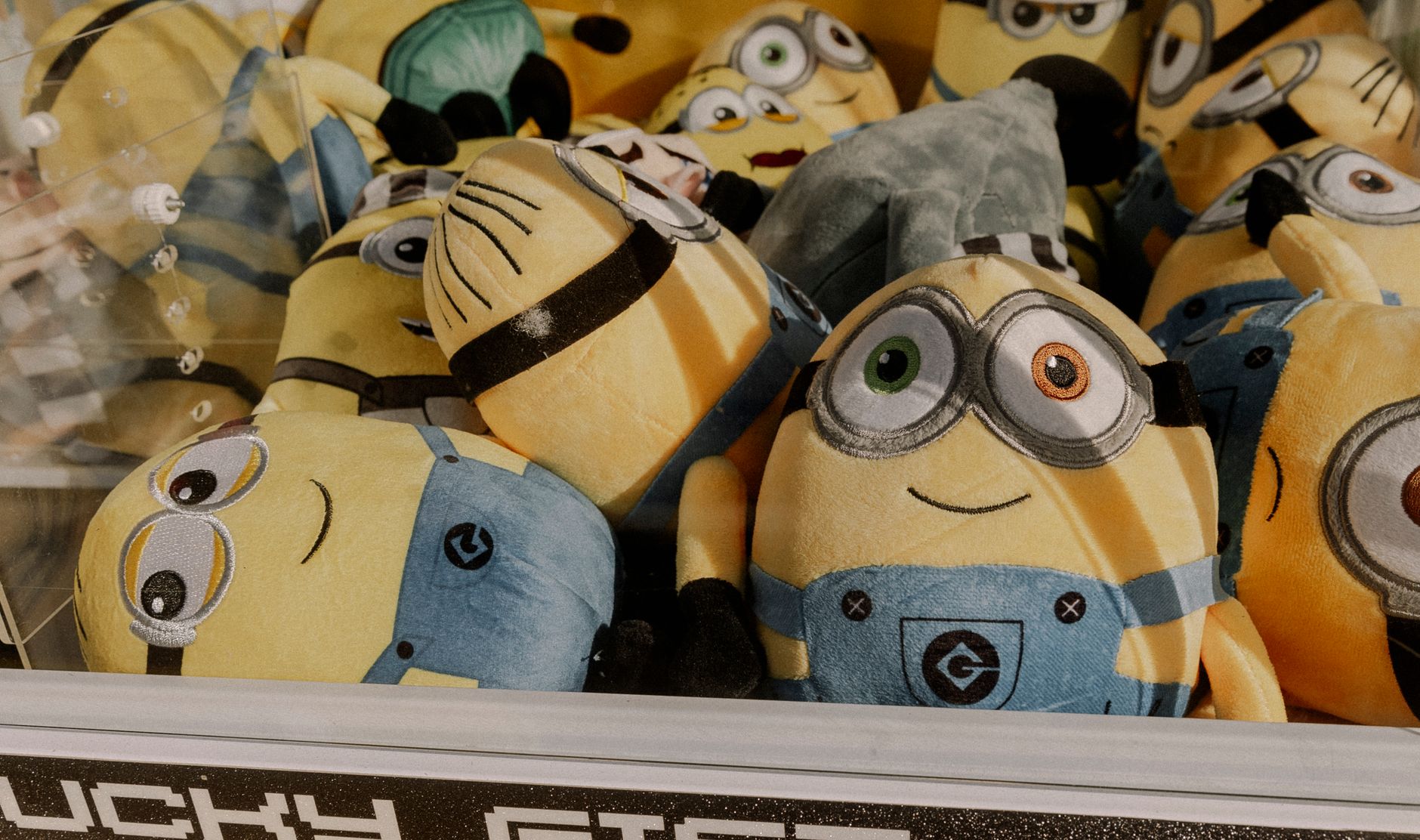
The Minions themselves are handed more screen time and dialogue than ever. Their language — "minionese" — occupies space no previous film has afforded it. Coffin, the voice actor and inventor of the linguistic chaos, clearly relished the opportunity. The trio (James, Henry, and Ed) carries the weight but doesn't distinguish themselves the way Kevin, Stuart, and Bob managed to in earlier films.
