Stéphane Denève conducts Montreal Symphony on Saturday with modern orchestral vision
The French conductor, director of St. Louis Symphony and New World Symphony, brings his quarter-century advocacy for contemporary music to the Amphithéâtre Fernand-Lindsay.
The day's top stories, food & events — every morning at 7. Unsubscribe anytime.
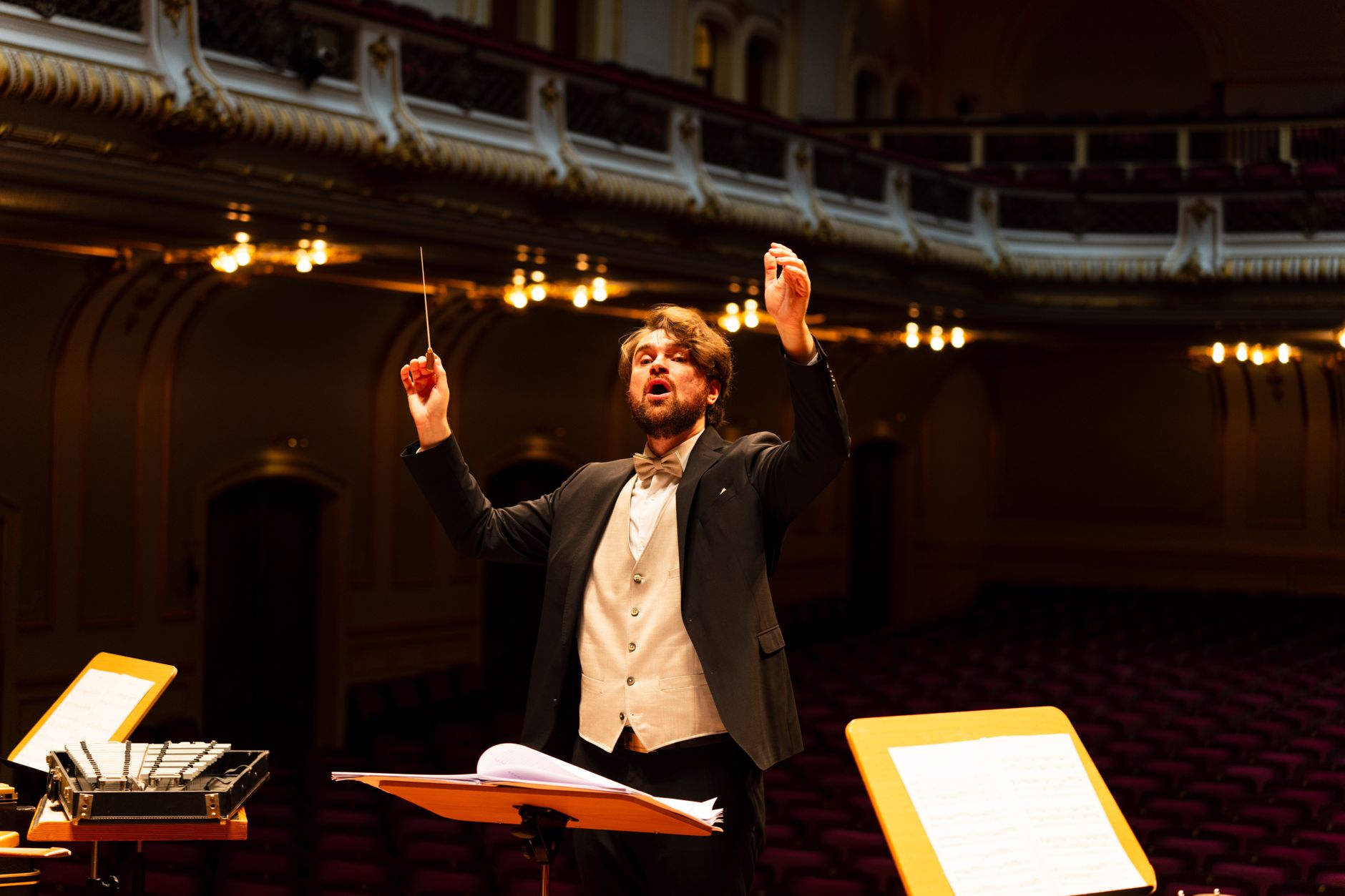
Stéphane Denève takes the podium with the Orchestre symphonique de Montréal on Saturday, July 25 at the Amphithéâtre Fernand-Lindsay. The French conductor arrives with two major posts in the United States: he has been director musical of the Orchestre symphonique de Saint-Louis since 2019, and artistic director of the New World Symphony in Miami since 2022, a role he was just recontracted for through 2032.
Denève's defining mission across a quarter-century has been to reshape how concert audiences experience contemporary composition. Our last interview with him in Montreal was 20 years ago, in 2006, when he declared: "For three-quarters of the public, contemporary music is synonymous with 'pillow amère' — a bitter pill — before listening to 'real music.' My combat is to change this cliché."
He pursued that vision relentlessly. In European posts — Brussels, Stuttgart, Scotland — he made it standard practice to integrate one contemporary work into every program. His conviction: audiences should be more excited to discover a new piece than to hear Beethoven's Fifth for the twentieth time.
The strategy proved prescient. Denève observes that post-World War II contemporary composition has shed its European dogmatism. In Europe, factions and chapels battled over atonal versus tonal aesthetics. In North America, economic reality — the need to sell tickets — forced orchestras to program composers reaching for public connection without sacrificing artistic integrity. Then came the diversity, equity, and inclusion reckoning, which "totally drowned the idea of dogma, of writing style or the traditional European debate between tonal and atonal, to establish a quite positive principle: try to make different voices heard. If a voice has something to say, it deserves to be played."
"In the 1990s, musical creation sometimes resembled a cemetery of ephemeral works," he reflected. "We find ourselves in a far more interesting period. It is fascinating to see how much we belong to an era that possesses its own style."
