Carleton students curate decades of Ottawa drag and queer nightlife into new archives exhibition
Drag The Archive, opening during Capital Pride week, displays photographs from the collections of photographer Philip Hannan and drag performer Peaches Latour, spanning the '70s through '90s.
The day's top stories, food & events — every morning at 7. Unsubscribe anytime.
When Morgan Mercury, a local drag performer, looks at photographs of queer people in Ottawa from decades past, the faces are unfamiliar but the reality is close. "This would have been us," Mercury said of images from the '70s, '80s, and '90s. "It's us living here in the past."
That generational connection anchors Drag The Archive: Photographs of Gender Queer Performance, an exhibition now open at the City of Ottawa Archives in Nepean. Developed by Carleton University students in partnership with the city's equity team and archives, the show draws primarily from two collections: photographer and queer-rights activist Philip Hannan's recently arrived records, and the personal scrapbooks of Paul "Peaches Latour" Fournier, one of Ottawa's best-known drag performers.
Twelve Carleton students spent their winter semester working with the material—physical photographs and, in many cases, negatives that first had to be digitized. Carleton history professor James Opp, whose third-year history practicum students led the work, said the project began as a hands-on partnership with an outside organization. But the material was deeper than a typical class assignment. Hannan's photographs, spanning decades and the country, arrived at the archives largely undocumented. Students had to become detectives, combing through old publications and advertisements, tracking down locations and performers, writing archival descriptions, and making curatorial choices about which photographs belonged on the wall.
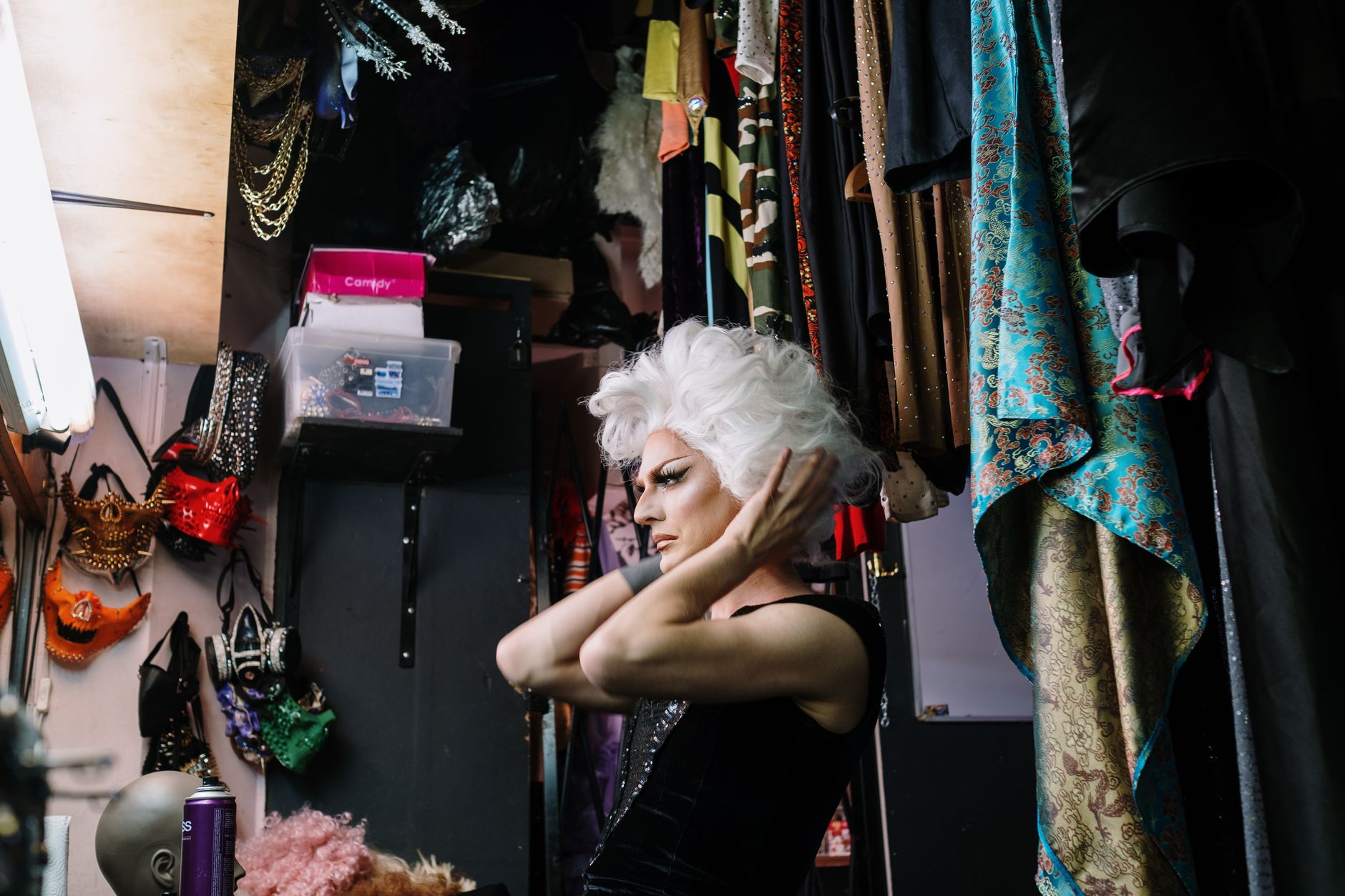
One series led them to the 1992 Miss Ottawa-Hull pageant at the McNabb Community Centre. Hannan's photographs capture performers backstage—styling hair, applying makeup, adjusting costumes before taking the stage. Other photographs turned out not to have been taken in Ottawa at all. Hannan travelled widely, and students determined some images of queer activism were shot in Toronto and Vancouver. "The students wanted to tell the story right," Opp said. "They don't want to tell somebody else's story the wrong way. So they were very conscious of, 'OK, what's ethical to show? What makes sense for the overall narrative?'"
Some people in the photographs went by different names, while others lived at a time when public identification as queer carried serious consequences. "There's a lot of interesting nuance with the idea of making this visible because there's been a lot of effort to hide for very many valid reasons," Mercury said.
The exhibition's structure mirrors that thoughtfulness. The first half features contemplative black-and-white photographs; the back half moves into brighter colour images. Performers appear onstage, but the exhibition also captures queer nightlife, friends spending time together, and drag artists participating in political protests. Few figures in Ottawa's queer history loom as large as Peaches Latour. Fournier, who moved from Buckingham, Que., to Ottawa, became a fixture of the city's drag scene, his scrapbooks documenting a long career of performance and community presence.
The details
Where is Drag The Archive on display?
Drag The Archive: Photographs of Gender Queer Performance is open at the City of Ottawa Archives in Nepean.
Who developed the exhibition?
Twelve Carleton University students developed the exhibition in partnership with the City of Ottawa's equity team and archives, under the direction of history professor James Opp.
What are the main sources for the photographs?
The exhibition draws primarily from photographer and queer-rights activist Philip Hannan's records and the personal scrapbooks of Paul 'Peaches Latour' Fournier, one of Ottawa's best-known drag performers.
