In mid-June, irises reach their heavenly peak
The flower named for the goddess of the rainbow blooms spectacularly across the city. Here's how to grow them.
The day's top stories, food & events — every morning at 7. Unsubscribe anytime.
The flower named for the goddess of the rainbow reaches its heavenly peak in mid-June, and 2026 is turning out to be a banner year for irises.
All through neighbourhoods there are bright explosions of these regal flowers. Irises take their name from the Greek goddess of the rainbow. Sweet-natured Iris was a handmaiden of Hera and a messenger between the gods and mortals, slipping down her rainbow to deliver communiqués from heaven. Iris also symbolized hope and optimism.
Down here on earth, there are something like 300 different species of irises, most of which originated in Europe, the Mediterranean and Asia. Perhaps the most familiar to Canadian gardeners is the bearded iris (iris germanica) — the tall, sword-leafed beauty lighting up gardens right now. Its heavy, frilly blossoms, borne in multiples on tall stalks, each feature six petals: three upright "standards" and three downward-facing "falls." In the centre between the two sets of petals is a little fuzzy tongue, an invitation to pollinators that, if you use your imagination a little bit, resembles a little goatée. Some even have a delicious, licorice-tinged scent.
Bearded irises come in almost every colour of the rainbow, from snow white to a purple so deep it's almost black. The only colour you don't see is true red — but the growers haven't stopped trying.
Other popular garden irises include iris reticulata or dwarf iris, which is smaller and grows from bulbs instead of rhizomes like other irises. They bloom early in spring, making them a lovely addition to an early spring border next to crocuses, snowdrops and early tulips. There's also a dwarf bearded type.
Siberian irises (iris siberica) are the ones immortalized by Van Gogh, and have smaller blossoms and finer, more straplike leaves than the sturdy swords of bearded irises; their falls tend to stick out more horizontally as well. They quickly form thick, profusely blooming clumps, which are glorious in their prime, but tend to hollow out after a few years. When that happens, dig them up, cut off the spent inner rhizomes and replant the outer healthy sections, and they'll soon go at it again. The same is true of bearded irises, though maybe not quite so exuberantly.
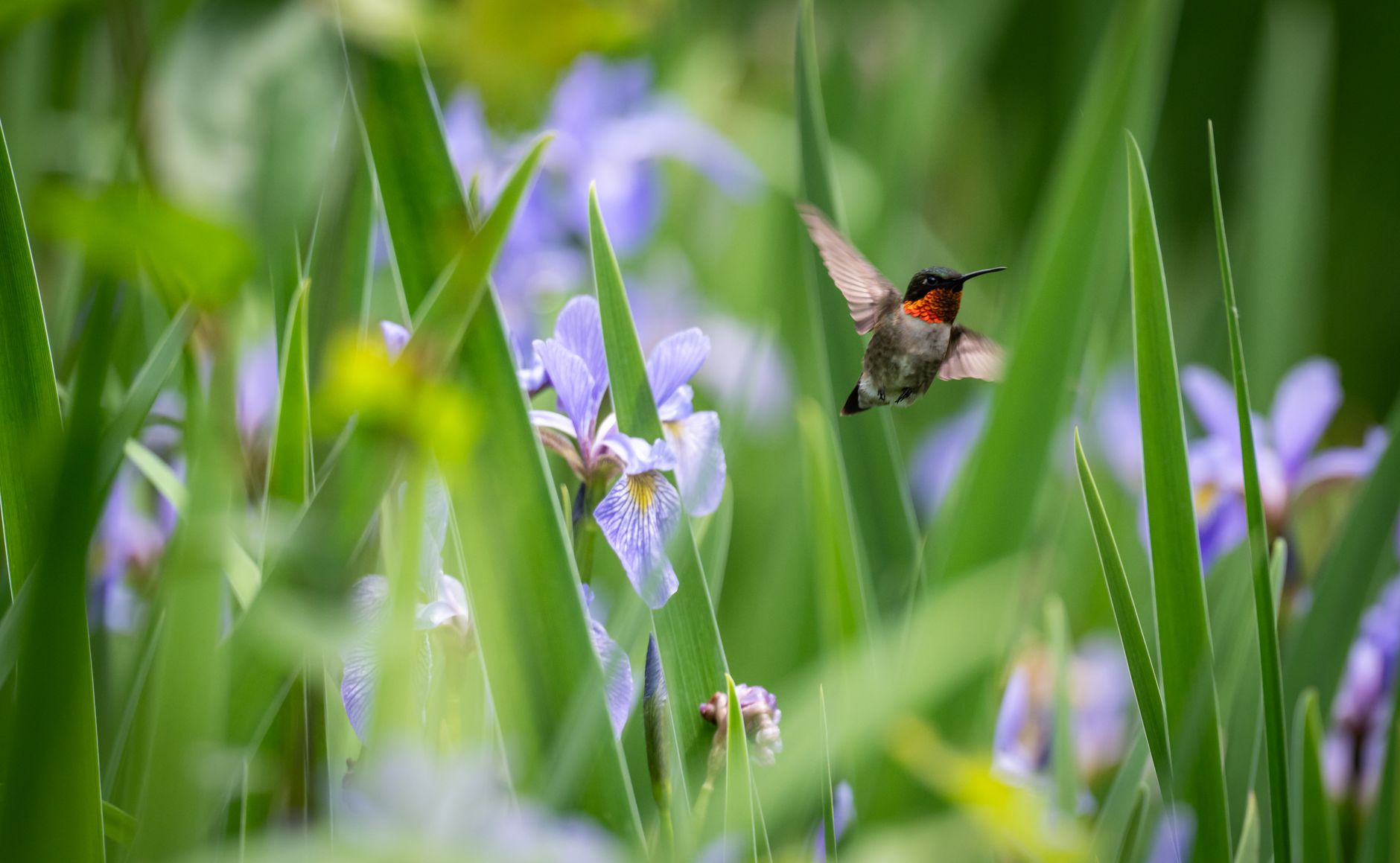
There is a "wild" form of iris as well, iris pseudocorus or yellow flag iris (or blue flag, depending on its colour), that grows in marshlands and the edges of ponds. It's technically an escapee, not a wildflower, having been imported by European gardeners a century ago, and despite its undeniable beauty is considered invasive. If you can't bear to pull up any growing on your property, at least don't let them spread.
With the exception of pseudocorus, irises thrive in full sun and well-drained soil on the dry side; they hate wet feet and will rot in standing water. Give them those two conditions and they'll continue to bloom happily for years, even decades.
