Ottawa's beluga bones tell the story of when the city lay beneath an ancient sea
In 1948, excavator operator J.B. Rolland unearthed a whale skeleton 28 metres below a sandpit near Riverside Drive. The find revealed Ottawa's hidden paleontological history.
The day's top stories, food & events — every morning at 7. Unsubscribe anytime.
On June 19, 1948, excavator operator J.B. Rolland was moving sand at the R.R. Foster Sand Pit on the east bank of the Rideau River in old Gloucester Township when something unusual spilled out of the hillside. Bones. Animal bones, buried roughly six metres from the river's edge and at least that deep in sandy terrain rising sharply up toward River Road—today's Riverside Drive, a stone's throw from what is now Ottawa International Airport and a chip shot from the Ottawa Hunt and Golf Club.
"Horse bones?" a crewman wondered.
"Those didn't come from any horse," Rolland replied. "And how would they be buried at the bottom of this pit? Must be something prehistoric, I'll bet."
It was a smart wager.
Fellow Foster employee Grant Harris phoned the National Museum on McLeod Street in downtown Ottawa—today's Canadian Museum of Nature. Paleontologist Charles M. Sternberg, son of legendary American dinosaur hunter Charles H. Sternberg and discoverer of Canada's first Tyrannosaurus rex in 1946, drove the nine kilometres to Foster's pit. Sternberg examined the exposed bones and asked workers to dig around them further. Additional remains surfaced. Sternberg hauled the collection back to his lab at the museum for intensive study.
Three days later, the Ottawa Citizen ran a front-page story by James Roe: "Remains of whale found in Sand Pits." Sternberg had determined the skeleton belonged to a white whale—Delphinapterus leucas—more commonly known as a beluga, the creature immortalized in a beloved 1979 children's song by Canadian musician Raffi.
The commercial sand pit, which doubled in the 1940s as a summertime beach for local swimmers and as a rallying point for Ottawa Light Car Club members, would become a party hot spot for teenagers in the 1950s and '60s. But to paleontologists, it held something more: evidence of a vanished world.
"The discovery of the bones 'may be an important scientific event,'" the Citizen story stated. "'To the scientist and the interested amateur, these obscure remnants voice a message to 1948 citizens from a very different era, when the Ottawa and Rideau valleys were covered by the brackish waters of the ancient Champlain Sea stretching far to the south.'"
The Champlain Sea was an erstwhile inlet of the North Atlantic Ocean, mixed with freshwater, that once submerged the landscape now occupied by Canada's capital. That beluga—one of the oldest known vertebrate residents of what would become Ottawa—had lived in those ancient waters thousands of years before Parliament ever convened on the Hill.
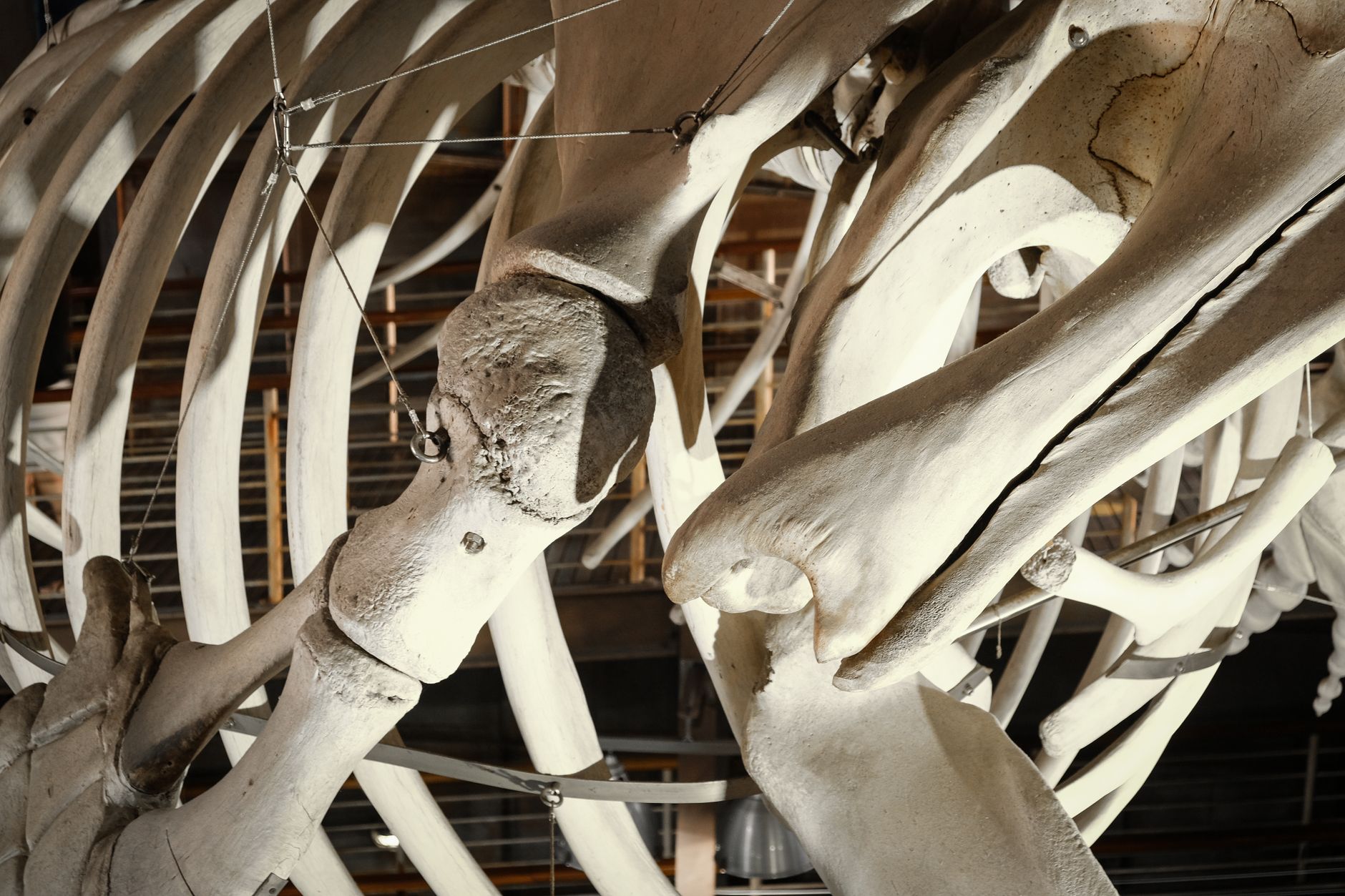
On a recent visit to view and discuss the beluga specimen, Dr. Scott Rufolo, curator of paleobiology at the Canadian Museum of Nature, sat beside the skeleton as it dangled from light chains attached to a long metal bar on a wheeled wooden platform. That's how the museum safely moves and displays it.
The find speaks to a deeper truth about Ottawa's geography and deep time. Beneath the city lies not just recent history—the lumber mills, the railways, the government—but also a paleontological record stretching back millions of years, waiting to be uncovered by chance or by the patient work of scientists like Sternberg and Rufolo. The beluga bones, suspended in their museum cradle, are a reminder that Ottawa's story is far older and stranger than its official birthday might suggest.
The facts
When were beluga bones discovered in Ottawa?
On June 19, 1948, excavator operator J.B. Rolland unearthed a beluga skeleton at the R.R. Foster Sand Pit on the east bank of the Rideau River in old Gloucester Township.
How deep were the beluga bones buried?
The beluga skeleton was buried at least six metres deep in sandy terrain, roughly six metres from the river's edge.
Who identified the bones as belonging to a beluga?
Paleontologist Charles M. Sternberg, who was at the Canadian Museum of Nature, examined the exposed bones and determined they belonged to a white whale, or beluga.
What ancient body of water once covered Ottawa?
The Champlain Sea, an erstwhile inlet of the North Atlantic Ocean mixed with freshwater, once submerged the landscape now occupied by Ottawa and the surrounding valleys.
