Honens Festival showcases piano beyond competition with new works and fresh interpretations
The September festival balances classical tradition with contemporary programming, mixing Bach fugues with new commissions and lesser-known women composers.
The day's top stories, food & events — every morning at 7. Unsubscribe anytime.
The Honens International Piano Competition holds a September festival in non-competition years, and this year's edition titled "Echoes and Transformations" leaned into the competition's core ideal: the "complete artist." Directed by pianist Jon Kimura Parker and shaped by Winston Choi, a competition winner from roughly 20 years ago, the festival experiments with how to retain traditional piano lovers while drawing audiences with fresh listening habits.
The opening concert split into two halves, each framed by a musical concept. The first half devoted itself entirely to contrapuntal music and fugue, beginning with Bach's The Art of Fugue before moving through Shostakovich, Alfred Schnittke, Glenn Gould, and Choi's own work — a collection of vignettes rather than extended pieces. The second half turned to musical impressionism, drawing from Debussy, Ravel, Schumann, Toru Takemitsu, Alexina Louie, Brian Current, and Leopold Godowsky. Pianists Winston Choi, Carter Johnson, and Jon Kimura Parker moved through the program.
The highlight was Choi's new piece, "Concurrents: The Water Remembers," composed and performed by Choi. Taking chords from impressionist water pieces, Choi wove echoes of Debussy and Ravel into what the program described as "an imaginative remembrance of things past" — music that satisfied both those drawn to the flowing feeling of water imagery and those who delighted in the allusions to the impressionist masters.
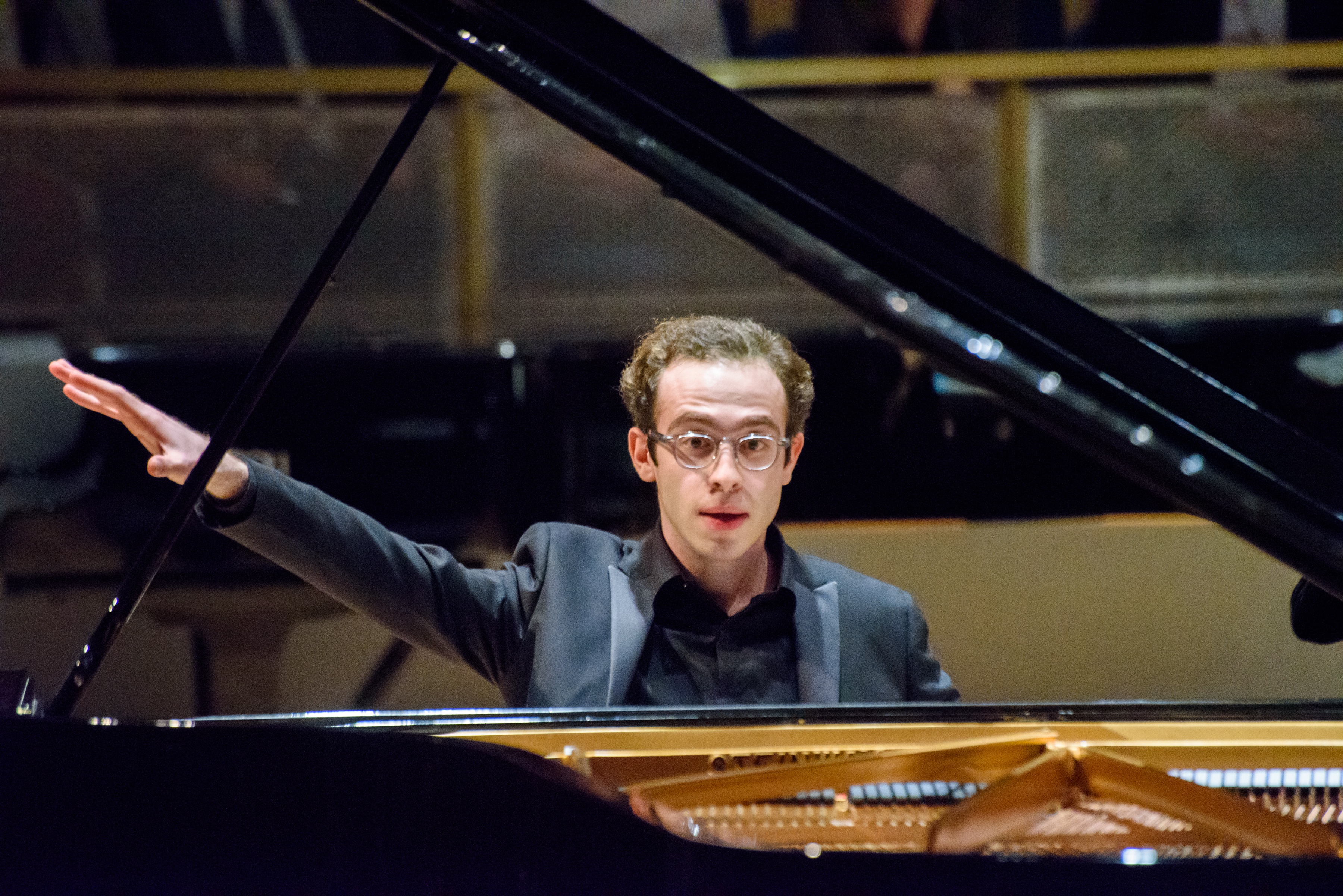
Elisabeth Pion's solo recital the following night centered on Chopin's Op. 25 Etudes, which she performed at the Honens Competition. Pion interwove etudes by lesser-known women composers Helene Montgeroult and Louise Farrenc, both of whom had connections with the Paris Conservatoire during Chopin's era. Hearing Montgeroult and Farrenc alongside Chopin — precursor and contemporary in spirit — offered fresh context. Pion's playing impressed with grace and elegance; she lingered over phrases in ways that sometimes approached the saccharine but never crossed into coldness. The "Winter Wind" etude brought technical bravura. The "Oceans" etude closed on a great C major chord, mirroring the opening of the first Op. 10 etude — a cycle within a cycle. An excited audience leapt to its feet, and Pion performed several encores.
Across both evenings, the standard of playing was extremely high. Each pianist offered more than competence — an extra measure of imagination and freshness that gave performances individuality. But it was the imagination of the programming itself — the passing of the musical baton from one performer to another, the challenge to listen in new ways — that made the concerts fascinating. The festival demonstrated that new wine can indeed fill old bottles.
The details
Who directed this year's festival?
Jon Kimura Parker directed the festival, with Winston Choi, a competition winner from roughly 20 years ago, shaping its direction.
What was the opening concert structure?
The opening concert split into two halves: the first devoted to contrapuntal music and fugue, beginning with Bach's The Art of Fugue, and the second exploring musical impressionism through works by Debussy, Ravel, Schumann, Toru Takemitsu, Alexina Louie, Brian Current, and Leopold Godowsky.
What new work premiered at the festival?
Winston Choi composed and performed 'Concurrents: The Water Remembers', a piece that weaves echoes of Debussy and Ravel into what the program described as an imaginative remembrance of impressionist water pieces.
Who performed the solo recital and what was its focus?
Elisabeth Pion performed a solo recital centered on Chopin's Op. 25 Etudes, which she interwove with etudes by lesser-known women composers Helene Montgeroult and Louise Farrenc, both connected to the Paris Conservatoire during Chopin's era.
