Tennis and pickleball players locked in court fight nationwide; experts say build more courts
B.C.'s Supreme Court dismissed a petition by tennis players seeking to restrict pickleball use, signalling a shift toward shared recreational space.
The day's top stories, food & events — every morning at 7. Unsubscribe anytime.
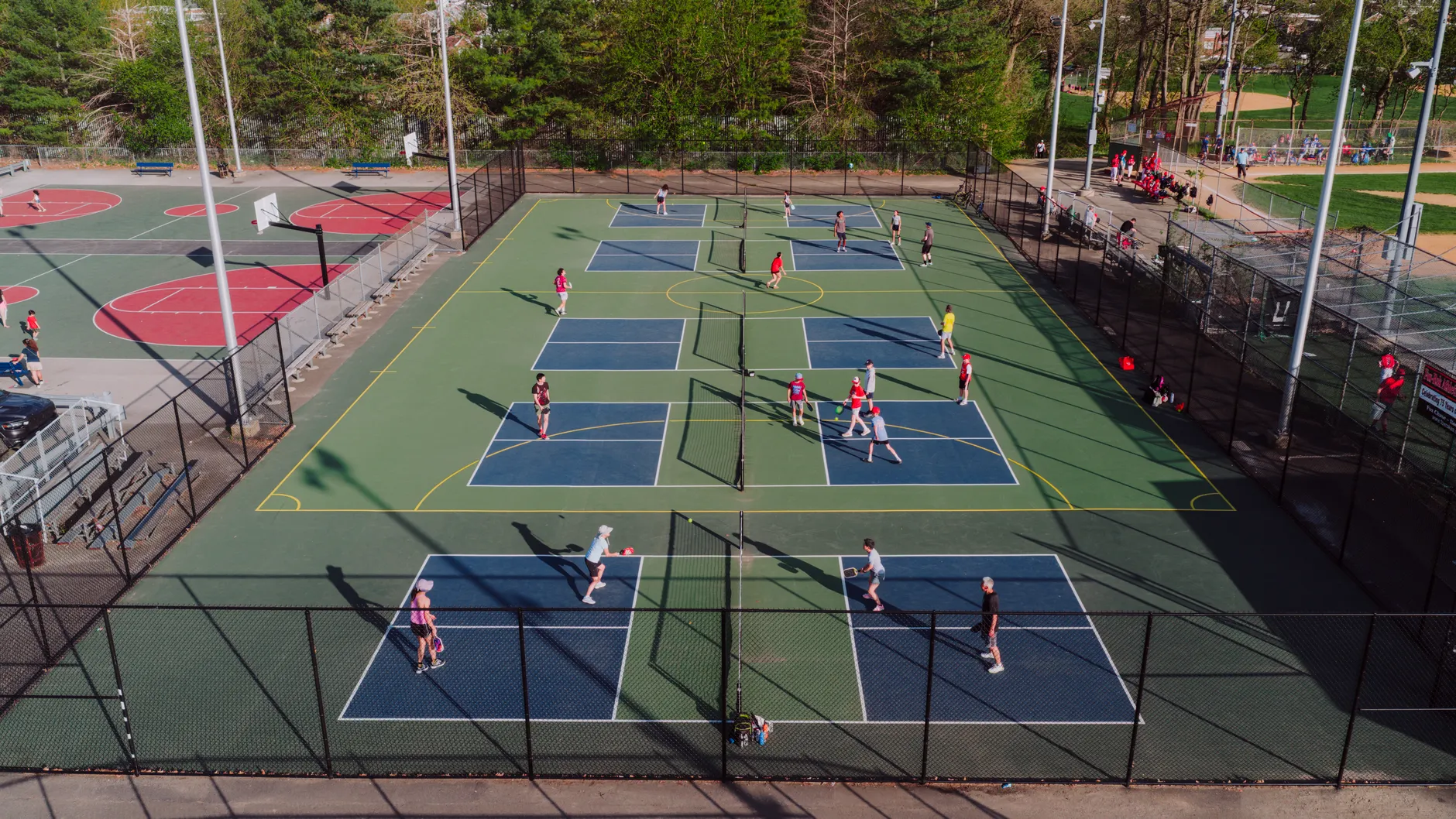
Across Canada, tennis and pickleball players are locked in a fierce competition for court time—and in some cases, in actual court.
When two public tennis courts in Scarborough, Ontario, were converted into six pickleball courts late last year, a local tennis player launched a petition calling on the city to reverse course. On Mayne Island, British Columbia, the conflict escalated further: tennis players petitioned to restrict pickleball players from accessing shared courts. B.C.'s Supreme Court dismissed their petition, ending the legal bid.
"These local squabbles are just a microcosm of what's happening right across the landscape of sports and recreation," says Matti Siemiatycki, a professor of geography and planning at the University of Toronto and director of the university's Infrastructure Institute. "Whether it's a hockey arena space, which is always at a premium, whether it's tennis space, whether it is park space, all of the swimming pool space — all of this is fiercely contested and how we're allocating it is both challenging and in some cases creating inequalities."
Experts in planning and sports policy say the real answer isn't to leave sports communities battling over publicly owned facilities or to leave sport entirely in the hands of for-profit organizations and those who can afford to pay. The answer is to address the supply problem.
Housing developers should be required to build more recreational facilities than current rules demand, says Peter Donnelly, a University of Toronto professor emeritus who directed the Centre for Sports Policy Studies before he retired. "I'd love to see them get back to the same kind of public housing policies that were in place after the Second World War, where Canada built hundreds of thousands of homes across the country and did so, very often, with including parks and recreational space and community centres as a part of that development," Donnelly said. "I think the developers just won the war on that."
Historically, housing developers seeking approval for projects with taller towers than zoning allowed had to negotiate with municipalities, which usually involved community consultation and requirements to fund recreational facilities, parkland, daycare spaces, and public art. But provincial and territorial governments have started reducing what municipalities can charge developers in response to the housing crisis.
In Ontario, changes that took effect in September 2022 capped community benefits charges at four per cent of the appraised land value at the time the building permit is issued. That cap means, in practice, there will be less funding available for recreational facilities going forward.
What percentage of new residential developments in Ontario include dedicated recreational facilities under the current four per cent cap?
Have any municipalities successfully negotiated exemptions from the four per cent cap for major projects?
We'll update this story as answers emerge.
