Inside Montreal's new $15M artist studio complex
LAB-545, a renovated textile factory on Legendre Ouest, gives 70 artists affordable workspace and room to create—a new model for keeping artists rooted in the city.
The day's top stories, food & events — every morning at 7. Unsubscribe anytime.
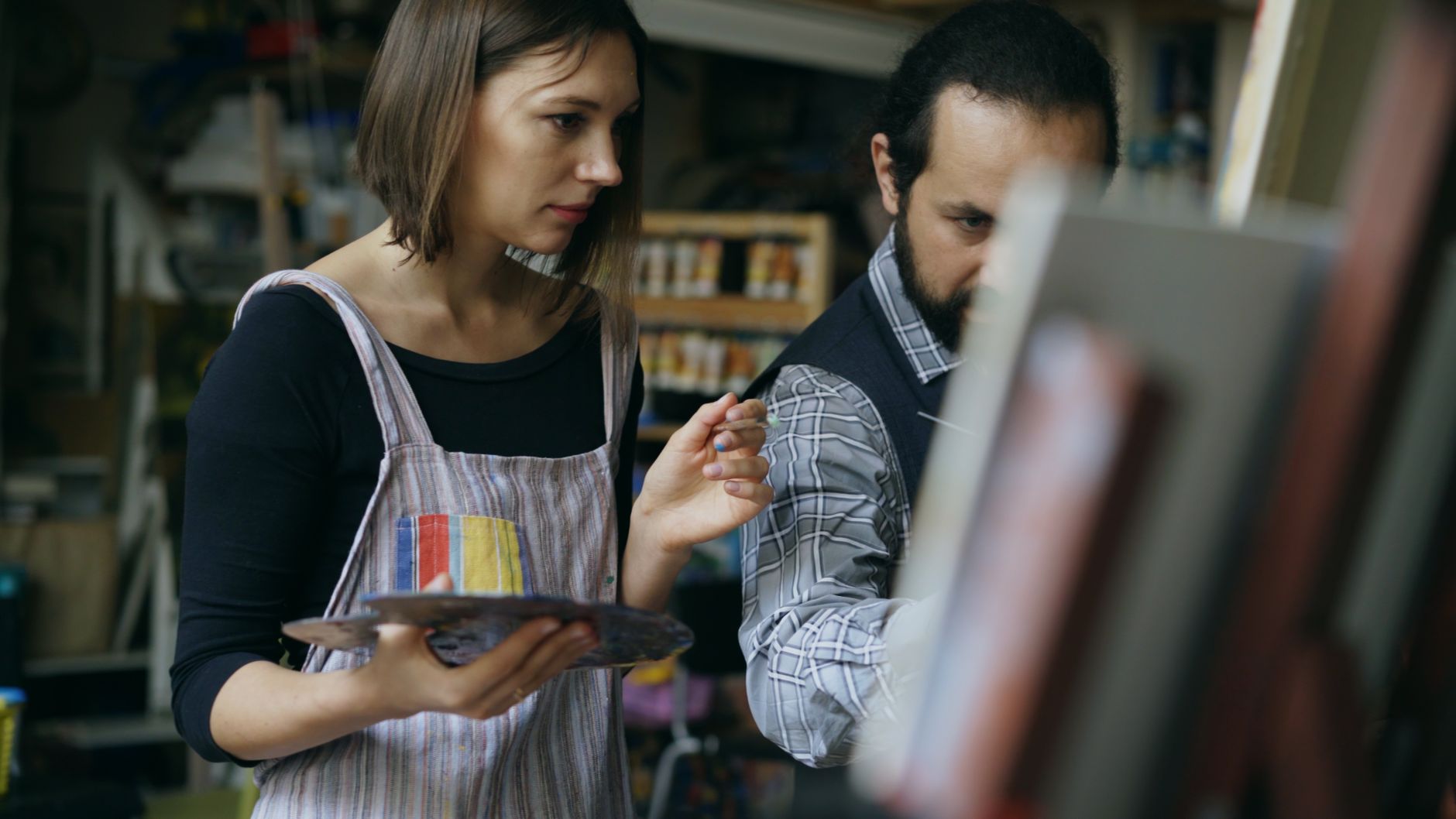
The old textile factory at 545 Legendre Ouest buzzes on a Friday afternoon with the sound of saws, welding torches, and conversations in a dozen languages. On the third-floor landing, someone adjusts a ceiling fixture. Two floors up, artists arrange an exhibition. In a corner studio, glass being blown glows orange under the lights. For the next three days—June 11 through 13—the doors are open to the public, and 70 artists are throwing open their workspace to show what happens when a neighborhood gets a second chance.
LAB-545, officially opened this week, is the second major project from Ateliers Belleville, a co-op born from necessity and ambition. The story begins in 2012 when Alexis Bellavance and Jonathan Villeneuve rented 2,000 square feet of studio space on Waverly in Mile-Ex. Three years later, they formalized Ateliers Belleville to let other artists share the rent and the risk. By 2021, they'd expanded to 6,000 square feet, hosting 22 artists—and then came the eviction notice. The landlord wanted the space back.
"We realized we needed to own the walls," Villeneuve said. So in 2018, they started hunting for a building they could buy and renovate themselves.
The former rag factory—a five-story industrial box on the western edge of the Plateau—became their answer. Ateliers Belleville bought the property just before Montreal's real estate market exploded upward. They renovated for $100 per square foot, a figure that now feels almost impossibly cheap. Federal support for building renovation covered 90 percent of the work; a loan from the FTQ real estate fund covered the rest.
"We occupied the building during the whole renovation and managed the whole construction," Bellavance said. That decision meant both founders had to put their own art on pause. Villeneuve, who worked with digital and electromechanical technologies, and Bellavance, who made installations, video, and audio pieces, became project managers instead.
"It was a difficult transition, but it feeds us a lot," Villeneuve reflected. "There's real meaning in what we're doing for the community."
Today, LAB-545 is part studio building, part cultural commons. The ground floor holds a commercial kitchen, showers, video-call booths, an exhibition space, and two performance rooms. Upstairs: woodworking and metalworking shops, a digital lab, ceramic kilns—including one massive kiln that can fire pieces the size of a person (its delivery involved considerable drama). The roof, white and accessible, will eventually host a terrace with views of Mount Royal, the 40, and the landing planes.
Artists rent large studios for $12 per square foot, a price that includes 30 percent shared workspace. It's the kind of rate that locks in affordability even as the neighborhood around it keeps climbing.
"Right now our studios are rented at market price," Villeneuve said. "But with this real estate market continuing to grow, in 15 years our prices will be unbeatable."
The model is deliberately long-term. Unlike the Waverly space, where Villeneuve and Bellavance had to scramble when the lease expired, LAB-545 is owned. The building itself is the insurance policy—a hedge against displacement in a city where artists keep getting priced out.
The open studios run through Sunday. Inside, 70 painters, glass artists, sculptors, textile workers, musicians, and makers will show visitors the actual conditions of making work in Montreal in 2026: not romantic, not Instagram-filtered, just real. A city that still has room for people to create if someone is willing to fight for the space.
