Spotted lanternfly detected in Windsor marks first confirmed sighting in Canada
The invasive pest, native to southeast Asia, was confirmed by the Canadian Food Inspection Agency on September 15. It threatens Ontario's grape and wine industries.
The day's top stories, food & events — every morning at 7. Unsubscribe anytime.
An invasive insect that has ravaged American crops for over a decade has reached Canada for the first time. The Canadian Food Inspection Agency confirmed a spotted lanternfly detection in Windsor, Ontario on September 15, 2026 — the first confirmed sighting in the country.
The pest, native to southeast Asia, was first found on the North American continent in Pennsylvania in September 2014. It has since spread across multiple U.S. states, damaging and killing grapevines while feeding on sap from more than 100 different plant species, including black walnut and tree-of-heaven (its preferred host). The insects also feed on native hardwood and fruit trees, threatening residential yards, public parks, and entire industries.
Ontario's grape and wine sector faces particular risk.
The Invasive Species Centre warned that spotted lanternfly "can have widespread economic, ecological, and social impacts if allowed to spread uncontrolled." Movement restrictions have been put in place to prevent the spread of regulated materials, including infested plant material. The surrounding area in Windsor is being surveilled to determine the extent of infestation, with steps being taken in accordance with the CFIA's response framework.
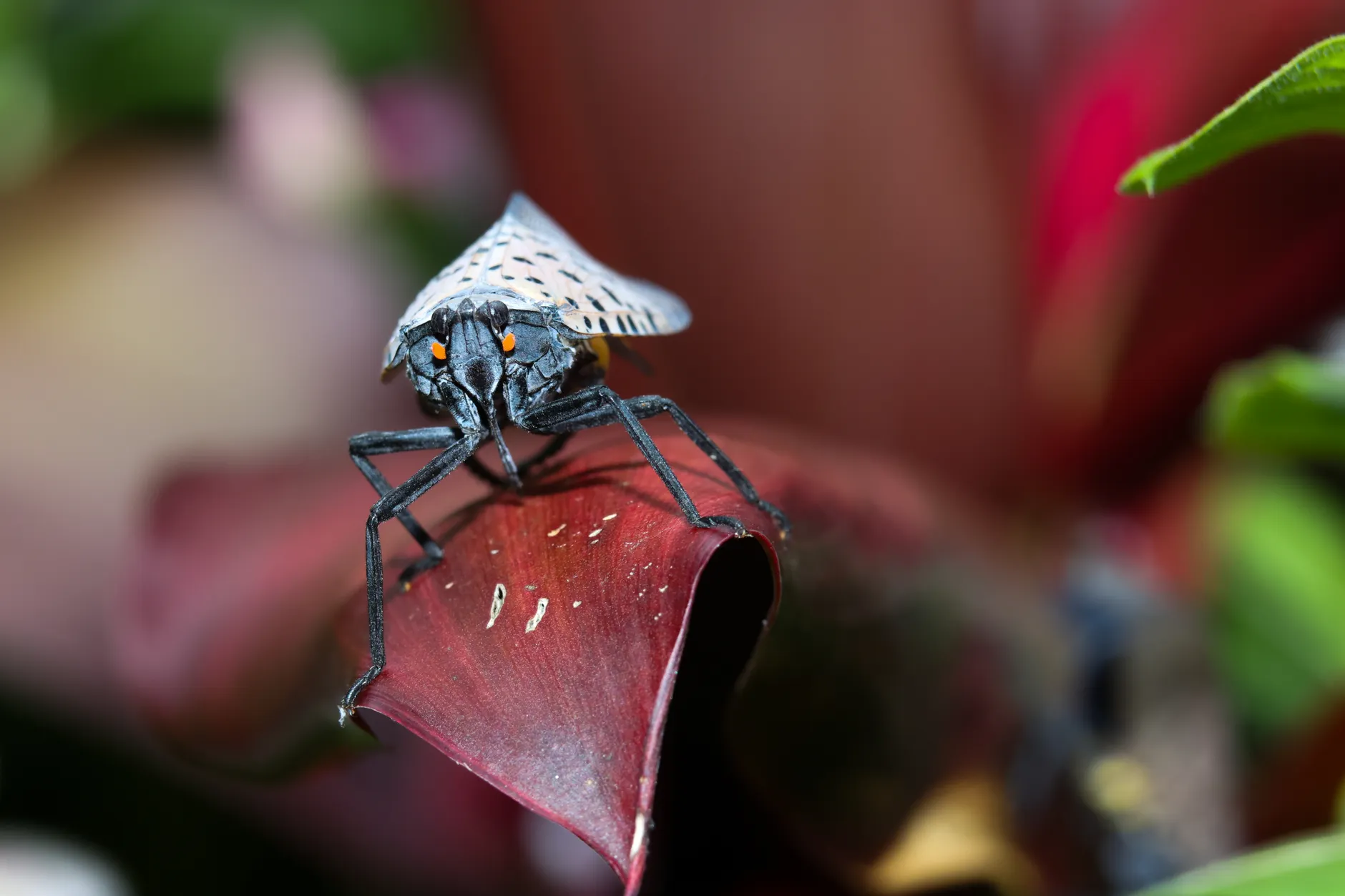
Adults are most active in September and October during mating and egg-laying season. Egg masses appear as grey smears of mud on trees or hard surfaces and typically appear beginning in September through winter until spring hatching. Early-stage nymphs are black with white spots; late-stage nymphs are red with black and white spots. Adults have pinkish-grey wings with black spots and often congregate in large swarms.
Honeydew — a clear, sticky liquid excrement — collects at the base of infested trees and can foster growth of sooty mold and attract bees and wasps, signalling infestation.
The CFIA is asking the public to report any suspected sightings immediately. Reports should include accurate locations and photos. "You can help identify and report new invasive species, such as spotted lanternfly," said Colin Cassin, Executive Director of the Invasive Species Centre. "The earlier an invasive species is detected, the better the chances of reducing spread to other areas."
By the numbers
When was the first spotted lanternfly confirmed in Canada?
September 15, 2026, in Windsor, Ontario, according to the Canadian Food Inspection Agency.
How long has spotted lanternfly been damaging crops in the United States?
Over a decade, since it was first found in Pennsylvania in September 2014.
What does spotted lanternfly feed on?
Spotted lanternfly feeds on sap from more than 100 different plant species, with a preference for tree-of-heaven. It also damages grapevines and feeds on native hardwood and fruit trees.
What are the visible signs of a spotted lanternfly infestation?
Grey smears of mud (egg masses) on trees or hard surfaces, honeydew (clear, sticky liquid) at the base of infested trees that fosters sooty mold growth, and large swarms of adults with pinkish-grey wings and black spots.
