The doctor who gave sport to millions: Dr. Frank Hayden's lasting legacy
The Special Olympics visionary who died this week at 96 fundamentally changed how the world sees athletes with intellectual disabilities.
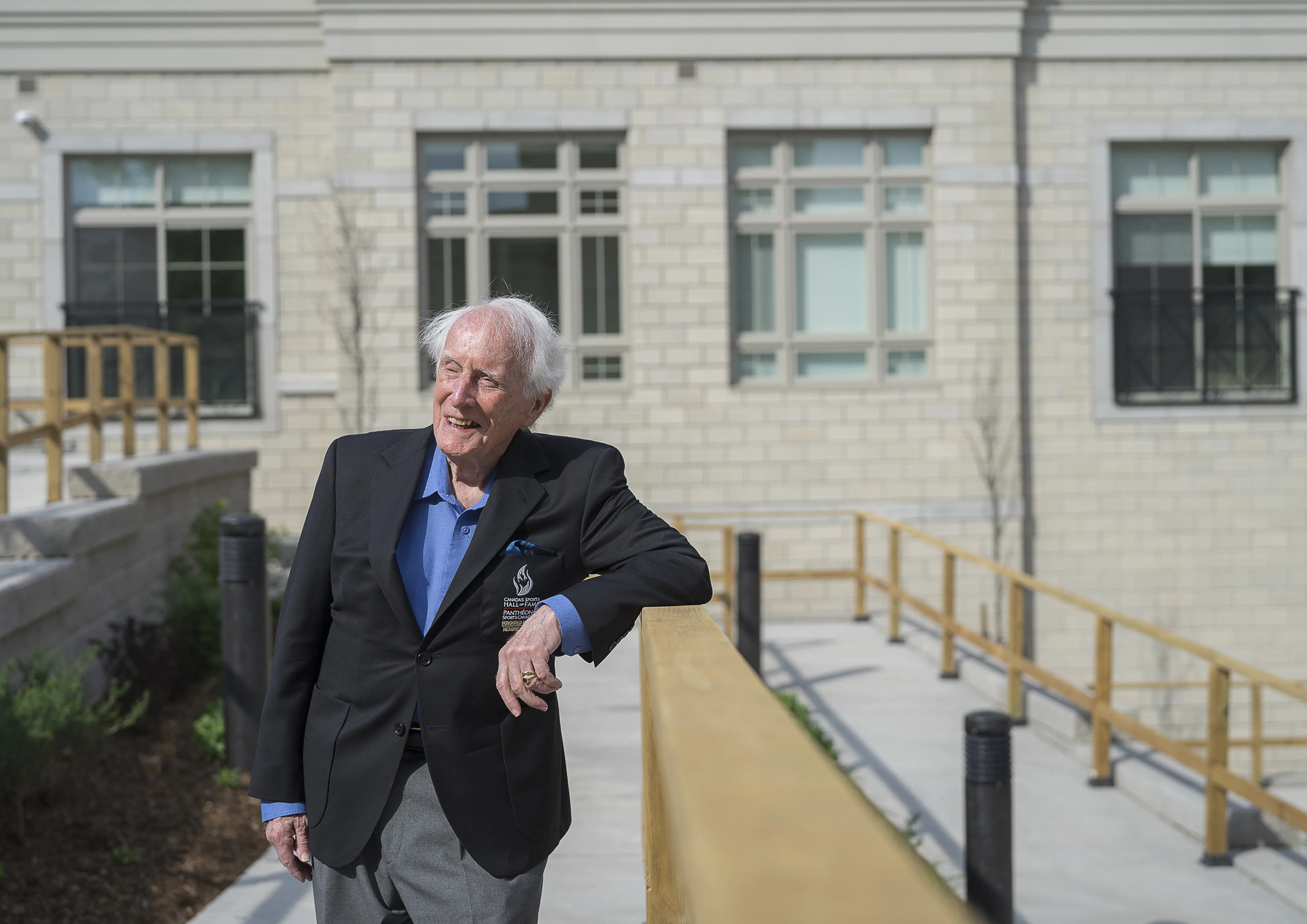
In the early 1960s, Dr. Frank Hayden walked into the University of Toronto's School of Physical and Health Education with a simple research assignment: study the physical fitness of intellectually disabled children. He spent two days in the library and discovered the field was nearly blank. "I figured that I would become an instant expert and that I had a blank sheet," Hayden later told The Canadian Encyclopedia.
By the time he died last Saturday at 96, that blank sheet had become a global movement serving 5.6 million athletes with intellectual disabilities in more than 170 countries.
Dr. Hayden's journey from researcher to visionary began in those library stacks. At Beverley School, a Toronto elementary school for children with developmental or physical disabilities, he proved what conventional wisdom said was impossible: that developmentally disabled children's poor physical fitness wasn't inherent—it stemmed from lack of exercise. "We found we could improve their fitness and health," he said.
In 1964, he published his findings with lesson plans in a book that sold 50,000 copies. He tried to launch Special Olympics in Canada but couldn't find political or financial backing. That changed when Eunice Kennedy Shriver, sister of President John F. Kennedy, discovered his research. She and her husband, Sargent Shriver, were running summer camps for developmentally delayed children and recognized something vital in Hayden's work.
"They kept calling me," Hayden recalled. "I told them I wasn't coming. But when you keep on saying no to those folks it means they must have you."
In 1965, what he thought would be a four-month assignment became seven and a half years. Hayden moved to Washington to direct the Kennedy Foundation, with his wife Marion and their four children. The Kennedys' prominence opened doors—not just money and attention, but political will that transformed a research project into a movement.
On a July day in 1968 at Chicago's Soldier Field, Hayden coordinated the first Special Olympics Games. Nine hundred athletes from 26 states competed, including the Beverley School floor hockey team from Toronto. When broadcaster Harry "Red" Foster, who had a developmentally disabled brother, attended that Chicago event, he told Hayden a similar games should happen in Canada.
"I didn't say, 'Red, I have been trying for two and a half years,'" Hayden recalled with characteristic dry wit. "I said, 'Red, I think you're right.'"
Canada's inaugural National Special Olympics Games happened a year later in Toronto. Foster and Hayden built not just an event but a national organization. Hayden insisted—with what colleagues called characteristic "bullheadedness"—that Special Olympics had to be centered on competition and sport, not charity or feel-good sentiment. That distinction mattered enormously.
"I don't think, even with all the money and all the fanfare that the Kennedys could bring to the table, that it ever would have crossed all the boundary lines it crossed without Frank's persistence that it would need to be about sport," said Glenn MacDonell, retired CEO of Special Olympics Ontario. "Sport would be the thing that would be the same in Africa as it would be in Vancouver."
From 1988 to 1992, on sabbatical from McMaster University (where he'd served as director of physical education since 1975), Hayden became what he called "the Billy Graham of the Special Olympics," traveling the world and establishing the organization in dozens of countries. His daughter Murn often accompanied him to Whitehorse, the Bahamas, Morocco, Greece, Italy, and South America.
Hayden's research preceded the movement—it prepared the ground. He showed that individuals with intellectual and developmental disabilities could compete and excel in sports. At a time when prevailing attitudes favored exclusion, when people with intellectual disabilities were seen as incapable and unsuitable for athletic participation, Hayden's work said: these are athletes.
York University professor Jonathan Weiss noted in 2018 that "Hayden's research helped us get to where we are today." Special Olympics became a thought leader in programs for children and adults, with and without disabilities, shaping how education and sport are approached globally.
Retired Olympic swimmer Mark Tewksbury met Hayden at a Special Olympics breakfast gala in 1992, a meeting that rekindled his joy in sport after the Ben Johnson doping scandal had tarnished the Canadian Olympic movement. "What I loved about Frank," Tewksbury said, "is when I would talk about the joy and spirit of Special Olympics, Frank would always bring me back to the athleticism. These are athletes, and I just loved how he brought a community to sport, and just wanted them to learn the skills and be on a high-performance athlete pathway, if they were so inclined, just like a traditional athlete would in the regular sport system."
Francis Joseph Hayden was born in Windsor, Ontario, in 1930, the younger of two sons. His father Joseph, an Irish immigrant and First World War veteran, worked in security and factories. His mother Ethel, from England, worked as a church cleaner and seniors' centre president. Growing up in St. Catharines, Frank developed a keen interest in sport, competing as a wrestler and becoming a lifelong runner.
For his contributions, Hayden received numerous honors: induction into Canada's Sports Hall of Fame in 2019, Canada's Walk of Fame in 2024, and several honorary degrees. He was named an Officer of the Order of Canada in 1999 and promoted to Companion in 2022. His proudest honor, according to his family, was having a Burlington, Ontario, high school named after him in 2013.
In his final years, as dementia and other health issues progressed, Hayden moved into a long-term care home in Oakville. He stopped traveling around the beginning of the COVID-19 pandemic. Marion, his wife of 67 years and what he called his "highly valued debating foil," predeceased him in 2024.
When Amy Van Impe, a 44-year-old Special Olympics athlete from Burlington, learned of his death, she called him a "superhero." "I got to tell him how important he was," she said. "I have an intellectual disability, and I'm on the autism spectrum.... He gave me the confidence to help other people and understand everybody's different."
That was Hayden's gift—not pity, not inspiration porn, but the radical belief that sport belongs to everyone. He didn't just build an organization; he changed how the world sees a whole category of human beings. In doing so, he proved that sometimes the most revolutionary thing a researcher can do is refuse to accept the limits that everyone else has already decided are fixed.