15 Dolphins Escape Shallow Tidal Pool After 12-Hour Entrapment
Pacific white-sided dolphins stranded at Qualicum Beach freed themselves with incoming tide. Experts urge distance to avoid stressing marine life.
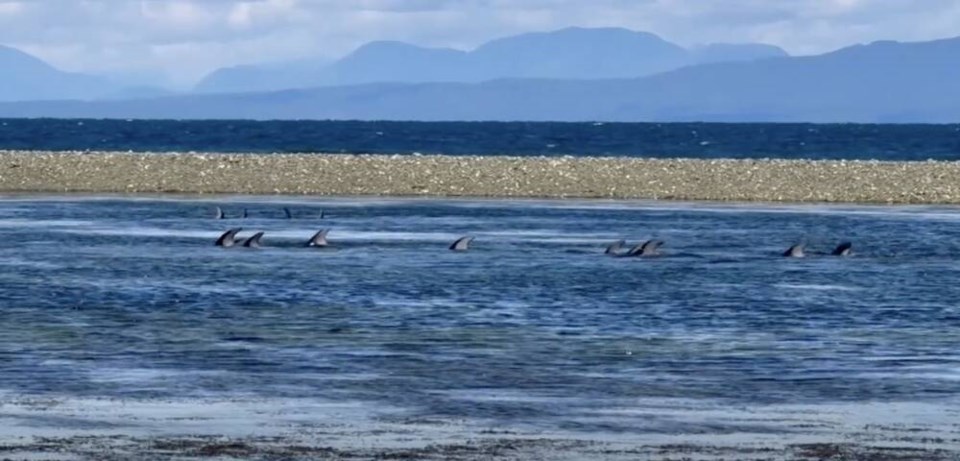
A pod of 15 Pacific white-sided dolphins that became trapped in a shallow tidal pool near Qualicum Beach on Saturday morning made their escape by evening, crossing a sandbar with the incoming tide and returning to deeper waters on their own.
The dolphins had been isolated in less than a metre of water during low tide—a rare and dangerous situation for a highly mobile species. At around 6:15 p.m., as water levels rose, they successfully navigated back to open water without intervention.
The Department of Fisheries and Oceans had officers on site to manage onlookers after photos spread on social media. The goal was simple: keep people at a distance to avoid stressing the animals further. Federal regulations prohibit approaching, feeding, or harassing marine mammals—approach distances are 200 metres for resting whales, dolphins, or porpoises with calves, and 100 metres for others.
Jared Towers, executive director of Bay Cetology in Alert Bay, called the entrapment unusual. "This was a small tidal pool on the beach," he said, noting that while he's observed other marine mammals stranded for up to a week, those cases involved much larger lagoons. The dolphins either chased fish into the shallow water as the tide dropped, or sought refuge from Bigg's killer whales, which hunt marine mammals in the Salish Sea.
The outcome was fortunate—all 15 dolphins escaped without injury. But the incident highlights how quickly coastal geography and predator presence can trap even intelligent, athletic animals. Entrapments differ from strandings (where animals beach themselves), which often prove fatal. An orca died near Zeballos in 2024 after stranding on a gravel bar; her calf spent weeks in a nearby inlet before being coaxed out.
For the dolphins, timing and tide worked in their favor.