Rehabbed pelican returns to wild after months of care
Calgary Wildlife released an American white pelican at Frank Lake after the bird spent over seven months recovering from serious injuries and parasites.
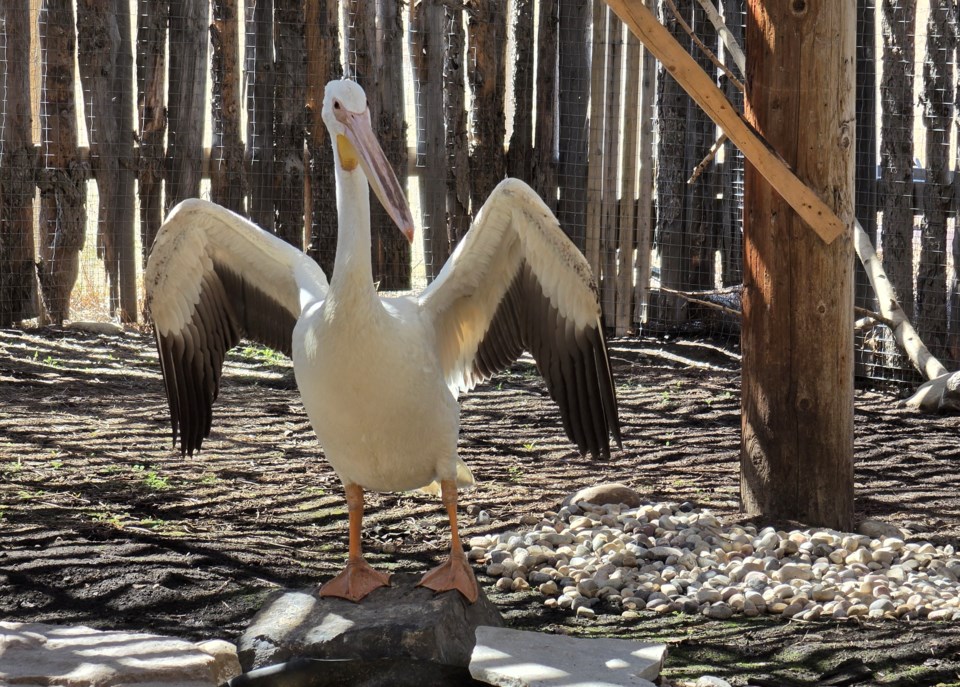
Calgary Wildlife celebrated a major recovery milestone Friday when they released an American white pelican at Frank Lake in Foothills County, east of High River, after the bird spent more than seven months receiving specialized rehabilitation.
The pelican arrived at Calgary Wildlife's veterinary hospital in October 2025 in dire condition. The bird was thin, dehydrated, and weak. Medical exams revealed a ruptured air sac, wing injuries, foot lesions, and a severe infestation of blood-sucking lice inside its mouth and pouch. Testing also detected lead in its system.
The lice infestation proved to be the most urgent crisis. These parasites made eating painful and difficult—devastating for a bird that survives by scooping and swallowing fish whole. Once the medical team treated the infestation, the pelican turned a critical corner. Within a week, the bird began eating fish independently and showed strong appetite, a sign recovery was possible.
"Once the lice were resolved and the pelican started eating independently, we knew we had a real chance," said Melanie Whalen, director of wildlife care and services.
Over the following months, the team provided ongoing pain management, parasite treatment, wound care, nutritional support, and regular veterinary checks. By April, the pelican had progressed enough to move into a large flight pen—the final step before release.
Caring for a bird this size is resource-intensive. This pelican alone consumed up to $250 worth of fish per week, preferring salmon, anchovies, and smelt. By spring, the bird was deemed healthy and ready to return to Frank Lake, an internationally recognized birding area.
"This bird needed months of expert care, daily monitoring, specialized housing, and a steady supply of fish," said Calgary Wildlife executive director Beki Hunt. "Its release is a wonderful reminder of what's possible when wildlife has access to the right care at the right time."