U of A's Pembina Hall: The building that became a pandemic hospital
In 1918, a student residence transformed into an emergency ward for Spanish flu. One professor died on his 39th birthday tending patients.
The day's top stories, food & events — every morning at 7. Unsubscribe anytime.
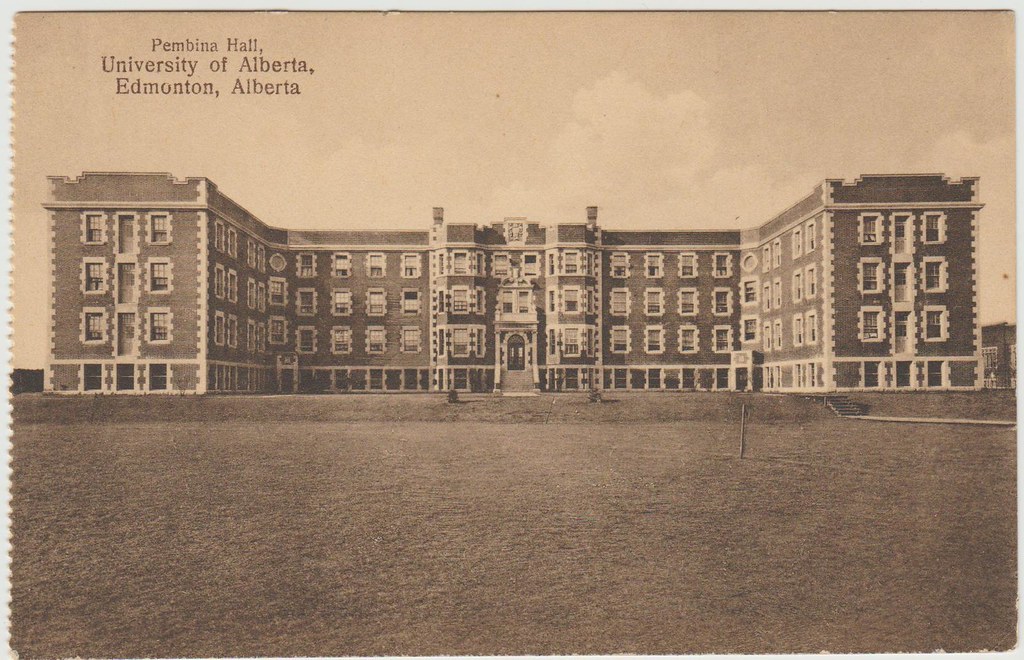
Pembina Hall stands on the University of Alberta campus today as an ordinary academic building — offices, classrooms, university operations scattered across its floors. But 108 years ago, during the Spanish flu pandemic, it became something entirely different: a makeshift emergency hospital where the university's faculty, staff, and students worked around the clock to save lives.
The building, constructed in 1914, was designed as a student residence. By October 1918, it had become a ward.
The Spanish flu swept across the world with terrifying speed, reaching Alberta by mid-October. Unlike ordinary influenza, this strain killed young, healthy people as easily as the elderly and infirm. As cases multiplied, Edmonton's public health response was blunt: schools, churches, theatres, and cinemas all closed. The goal was simple — stop gatherings, slow transmission, buy time for the sick to recover or die.
It didn't work. Nearly 8,000 Edmontonians contracted the flu. Six hundred fifteen died.
The university, remarkably, remained active. Classes were cancelled, but the building itself became a hive of purpose. Faculty, staff, students, and community volunteers stepped up. For about a month, Pembina Hall converted from a residence to a temporary hospital, treating more than 300 patients.
Mabel Patrick, the university's new household economics instructor, prepared meals for the sick. Those same meals were also packaged and sent across the city to families caring for the ill at home. Mathematics professor Ernest Sheldon and classics professor W.H. Alexander recruited volunteers and coordinated a fleet of automobiles to shuttle nurses and food throughout Edmonton.
One man stands out from the records: William Muir Edwards, the university's first professor of mathematics and civil engineering. Edwards was 39 years old. His mother was Henrietta Edwards, a women's rights activist, artist, and member of The Famous Five. He died on his birthday — November 14, 1918 — after contracting influenza while caring for ill students. He was one of 72 people who died from the illness at Pembina Hall alone.
Today, a plaque affixed to the building memorializes Edwards and commemorates his service. It is a small marker of a much larger story: how the university became a refuge during crisis, how strangers cared for strangers, and how one man gave his life in the act of care.
Pembina Hall's transformation during the 1918 pandemic offers a mirror to the present moment. Buildings designed for one purpose become something else when the city needs them. Ordinary people — professors, staff, volunteers — become essential workers. The university, far from shuttering, becomes part of the city's survival apparatus.
When you walk past Pembina Hall today, the flu is gone. The emergency is over. But the plaque remains, a quiet reminder that this building once held the city's grief — and its will to survive.
