Forest tent caterpillars invading Edmonton tree canopy in record numbers
Millions of caterpillars are eating their way through poplar leaves in the river valley as Edmonton enters what scientists expect to be a 10-to-15 year population boom.
The day's top stories, food & events — every morning at 7. Unsubscribe anytime.
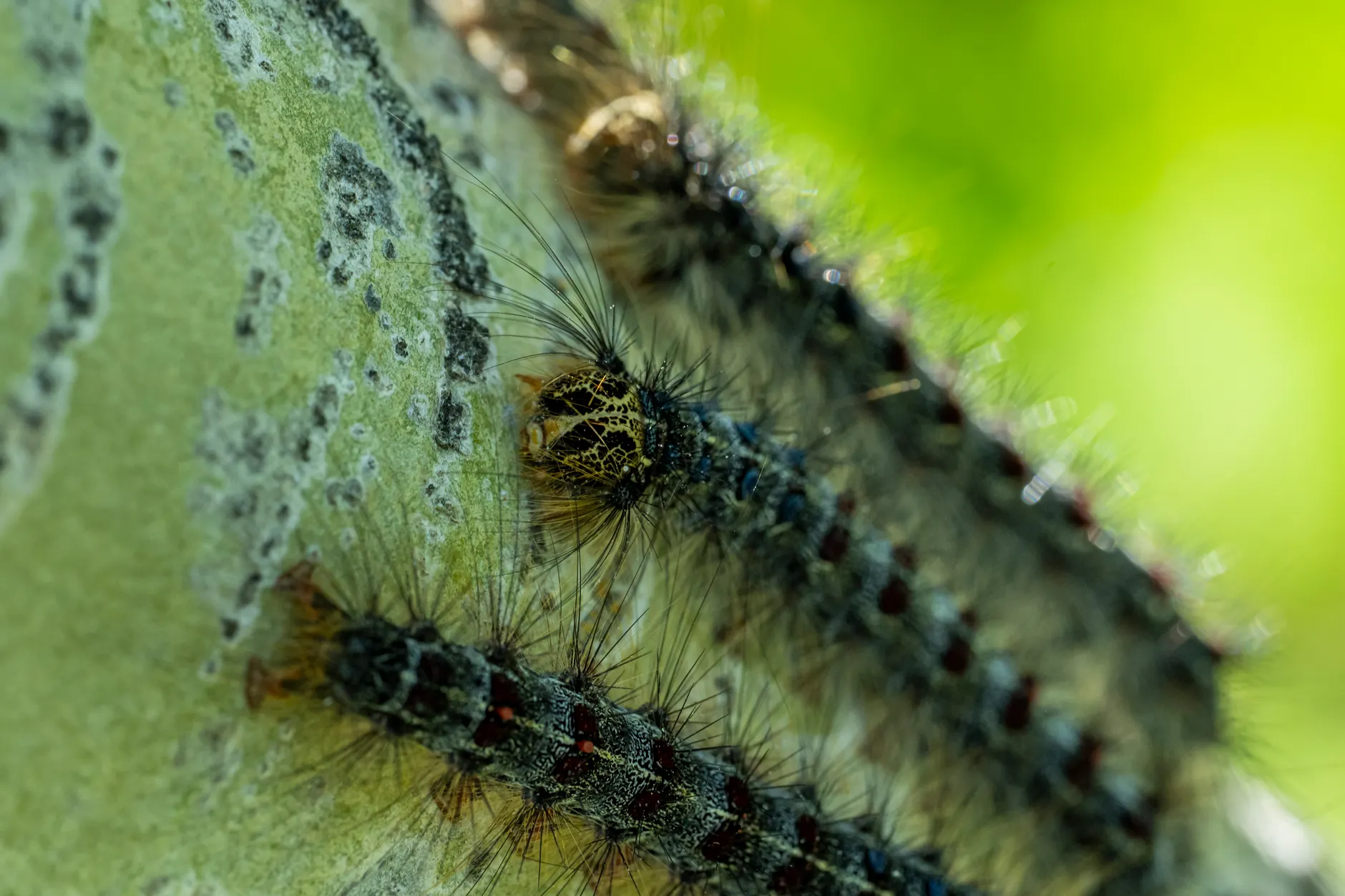
Hundreds of thousands — possibly millions — of forest tent caterpillars are crawling through Edmonton's trees right now, and the invasion is expected to continue for years.
The creatures are native to Alberta and generally harmless to the ecosystem, though trees already suffering poor health may not survive the feeding frenzy. What's distinctive about this year is the sheer volume. Rising numbers suggest Edmonton is in the early stages of a 10-to-15 year population cycle.
"They've emerged from their egg cases and they're moving out on to the leaves of the poplar trees and growing from there," said Mike Jenkins, senior scientist for the City of Edmonton. "They kind of start off in little clusters. You'll see a big patch of them sitting on the trunk of the tree all together."
Unlike their Eastern cousins, forest tent caterpillars (Malacosoma disstria) don't actually build tents. Once they're large enough, they search for a spot to cocoon — on other trees, fences, garages, or houses. "They spin themselves sort of a little silken pierogi and pupate inside there for about a week or so," Jenkins said.
Around the end of June, chunky brown moths emerge. On bright nights in the city, they congregate in large clouds near lights. Many become food for birds, bats, reptiles, and small mammals. Survivors lay bands of tiny black eggs on poplar branch tips, which will hatch into next year's caterpillars.
The caterpillars do create one hazard worth noting: they can turn bike paths slippery and treacherous. When populations boom too high, natural predators — ground beetles, ants, parasitic flies, and wasps — eventually move in and help control the outbreak.
For now, the river valley is in prime caterpillar season.
