Montreal's Metro is the most beautiful transit system in Canada, and it's not close
Built ahead of Expo '67 with raw concrete, a Paris entrance and stations that rival cathedrals, the Montreal Metro is the case for transit as public art.
The day's top stories, food & events — every morning at 7. Unsubscribe anytime.
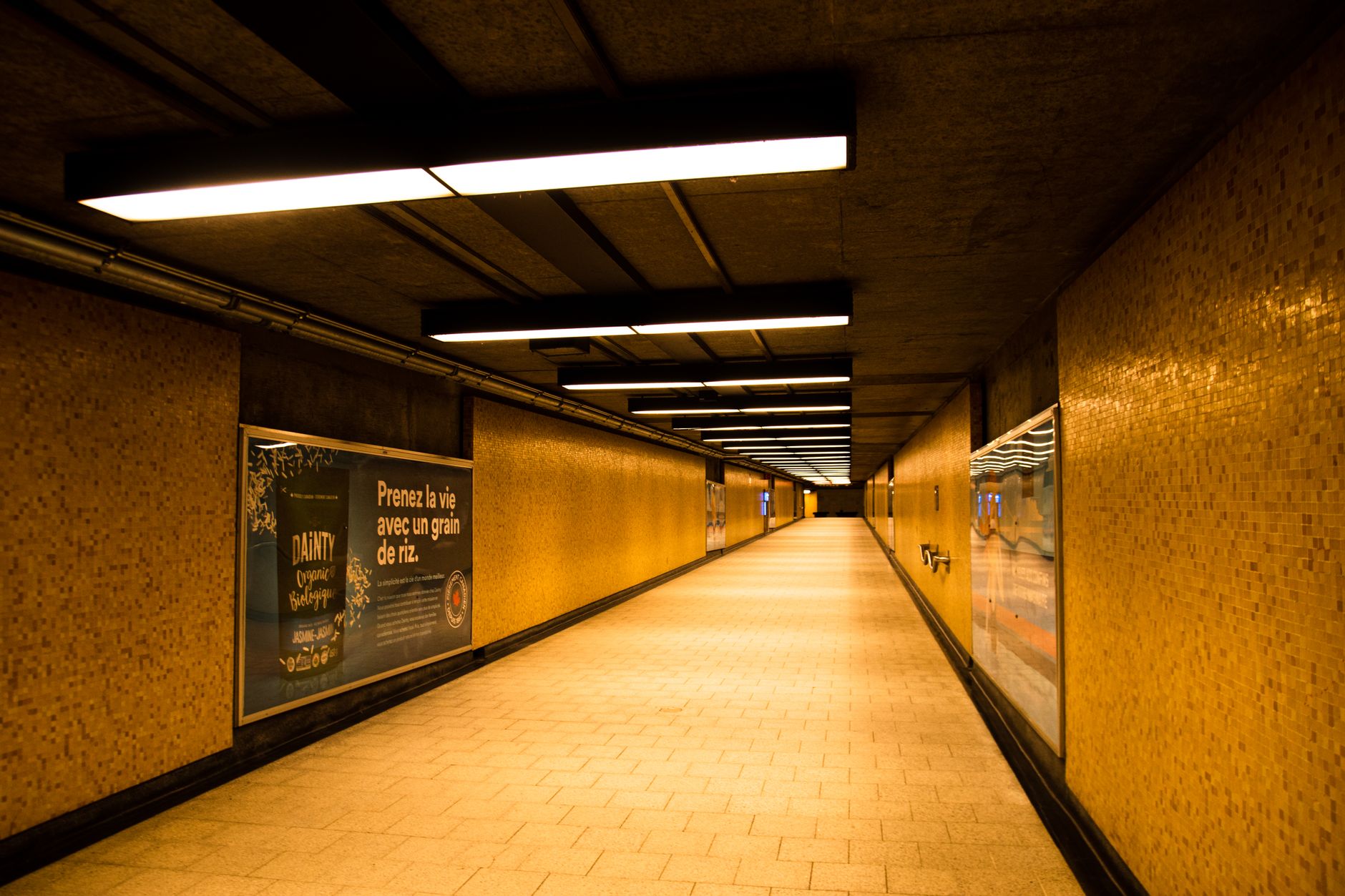
A ride on the Montreal Metro can feel less like commuting and more like walking through a linear art gallery. That's the case a lifelong Toronto Transit Commission rider makes after visiting dozens of Metro stations over a few days.
Toronto has Canada's busiest subway network, and Vancouver has the SkyTrain. But the author argues the Montreal Metro is the most visually impressive and perhaps the most functional system in the country. Their verdict is an opinion, not a measured finding: no ridership or cost figures are offered, and the Société de transport de Montréal, which runs the system, has not responded to the praise.
The Metro's look was set in the 1960s. Montreal's first two lines, Green and Orange, opened in 1966, and the Yellow line followed in 1967. The network has since grown to 68 stations across four lines. The first stations opened on Oct. 14, 1966, and they were built in Brutalism, a style named for the French "béton brut", or raw concrete. The author says those early stations push the style to its limits, with vast underground spaces that compare in scale to the city's historic cathedrals.
The system was part of a wave of infrastructure spending ahead of Expo '67, under then-mayor Jean Drapeau. Montreal was then Canada's largest city.
Later stations kept the look. Verdun, which opened Sept. 3, 1978 on a Green Line extension west to Angrignon, uses exposed concrete, skylights and a strong sense of scale. Square-Victoria–OACI on the Orange Line has an original Art Nouveau entrance from the Paris Metro. It was designed by Hector Guimard and gifted to Montreal in 1967 to honour collaboration with French engineers, and it has become a tourist photo spot. The Metro's rubber-tired trains were also inspired by the Paris system.
The author singles out Place-Saint-Henri for its soaring ceiling vaults, geometric lighting and bursts of colour. They also note the station looks well kept, with no burned-out bulbs, no visible graffiti and no brake dust on the ceilings, which they credit to the rubber tires.
HighOnCity has covered Vancouver's transit fight this year. In June we reported that advocates were pushing for a low-income pass ahead of a fare hike, and that the city was asking Ottawa for discounted transit passes for low-income riders. Montreal's Metro is a reminder of what a system can look like when it is built to be looked at as well as used.
The facts
How many stations does the Montreal Metro have?
The Montreal Metro has 68 stations across four lines.
Who designed the Art Nouveau entrance at Square-Victoria-OACI station?
The Art Nouveau entrance at Square-Victoria-OACI station on the Orange Line was designed by Hector Guimard. It was gifted to Montreal in 1967 and came from the Paris Metro.
