B.C. border duty-free shops struggle as Premier Eby renews U.S. boycott call
Peace Arch Duty Free owner says business surged mid-summer but plummeted after Eby's latest call to avoid American shopping. He's asking the province to drop its 20% liquor markup.
The day's top stories, food & events — every morning at 7. Unsubscribe anytime.
With B.C. Premier David Eby renewing calls for residents to boycott travelling to and purchasing from the U.S., border businesses on both sides are bracing for economic fallout.
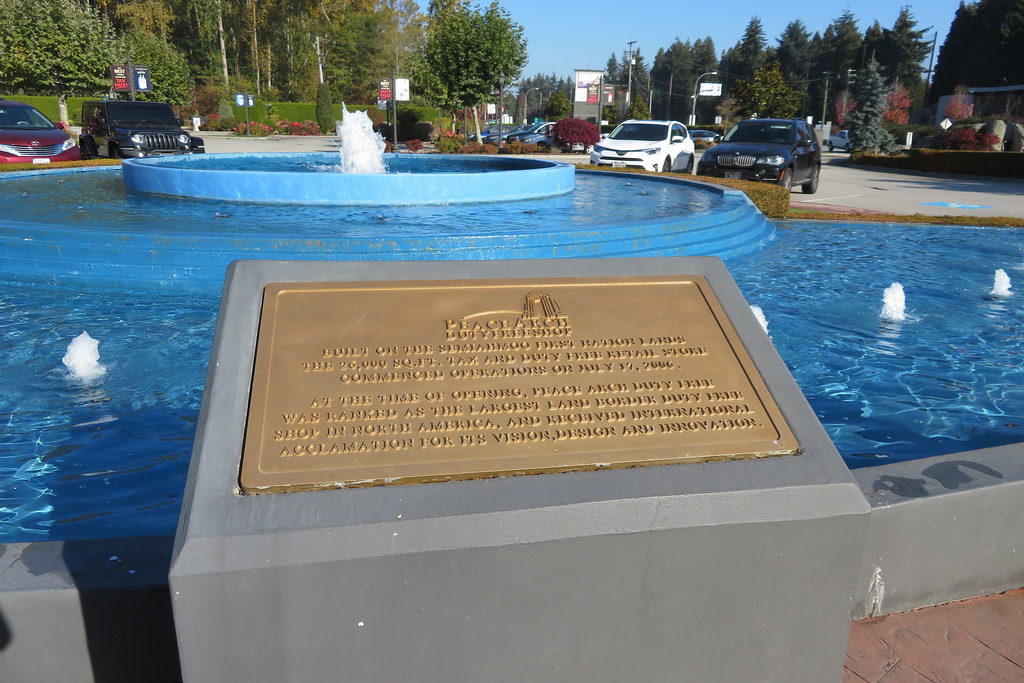
Peter Raju, owner of the Peace Arch Duty Free shop in Blaine, Washington, just south of the Semiahmoo First Nation border crossing, said business surged starting mid-April and remained strong through summer, including during the FIFA World Cup when foreign tourists and Canadians travelled freely. But traffic dropped sharply again after Eby's call last week for British Columbians to buy local and avoid U.S. travel following a trade dispute.
Eby renewed his boycott message after U.S. trade talks with Canada were suspended and President Donald Trump levied new tariffs on Canadian goods. Canada responded by announcing "dollar-for-dollar" tariffs on more than 700 U.S. products, set to begin September 8.
Raju supports protecting Canada but wants the province to protect border businesses too. Early this year, he said, he was considering closing entirely after losing so much revenue. "There were promises made to take care of businesses like ours that were affected by this, and the premier's office has refused to talk to us. We've written numerous letters. There has been no response at all," he said.
What Raju is asking for is concrete: remove the 20% liquor markup the B.C. Liquor Distribution Branch applies to duty-free stores. That markup puts his shop at a pricing disadvantage against American competitors across the border who face no such tax. The Liquor Distribution Branch has defended the markup as one of the lowest in the country and says revenue from it funds public services.
Dave Duncan, manager of International Marketplace grocery store in Point Roberts, south of Tsawwassen, reported even sharper pain. "We just finished a week being down 21 per cent," he said. "We were actually trending up most of the summer and then all of a sudden starting last Monday, just nothing." The store relies heavily on Canadian visitors who historically double Point Roberts' population during busy seasons. Managing perishables like produce, meat and dairy becomes nearly impossible when foot traffic vanishes unpredictably.
Michelle Schwalback, general manager at Nielson's Building Center in Point Roberts, said her store has fared better than others, but gas stations and restaurants are struggling visibly. "Politics are tough, I totally get that, but I think we still remain friends regardless because we have way more in common, and we've shared so much. So this will pass," she said.
A recent report from the Border Policy Research Institute and the Bellingham Regional Chamber of Commerce surveyed affected businesses. Those in food, retail, tourism and other sectors overwhelmingly reported suffering, with many saying they're worried about survival. A quarter of struggling businesses said they've cut hours, laid off staff or raised prices to stay afloat.
When travel south was first discouraged by political leaders in 2025, Raju lost about 80% of his business and laid off most staff, keeping only a skeleton crew. After recovery, he and other owners are now bracing for a return to crisis conditions. He draws some hope from American neighbours. "Americans are coming to us and apologizing and supporting us," he said. "And they're telling us, 'We are family, we are friends and we are neighbours, and we have been for hundreds of years. Let's not let the politics disturb that relationship.'"
The facts
What is Peter Raju asking the B.C. government to do?
Peter Raju, owner of Peace Arch Duty Free in Blaine, Washington, is asking the province to remove the 20% liquor markup that the B.C. Liquor Distribution Branch applies to duty-free stores, which he says puts his shop at a pricing disadvantage against American competitors.
What did Dave Duncan report about International Marketplace grocery store in Point Roberts?
Dave Duncan, manager of International Marketplace in Point Roberts, reported the store was down 21 per cent for a recent week after trending up through most of the summer.
How many businesses said they've cut hours or laid off staff?
A quarter of struggling businesses surveyed by the Border Policy Research Institute and the Bellingham Regional Chamber of Commerce said they've cut hours, laid off staff, or raised prices to stay afloat.
