Chinook salmon going blind as Salmon River runs dry; BC struggles with routine drought crises
Blinded Chinook salmon in Shuswap reveal the cost of emergency water restrictions that have become an almost yearly occurrence as the province lacks a proactive drought strategy.
The day's top stories, food & events — every morning at 7. Unsubscribe anytime.
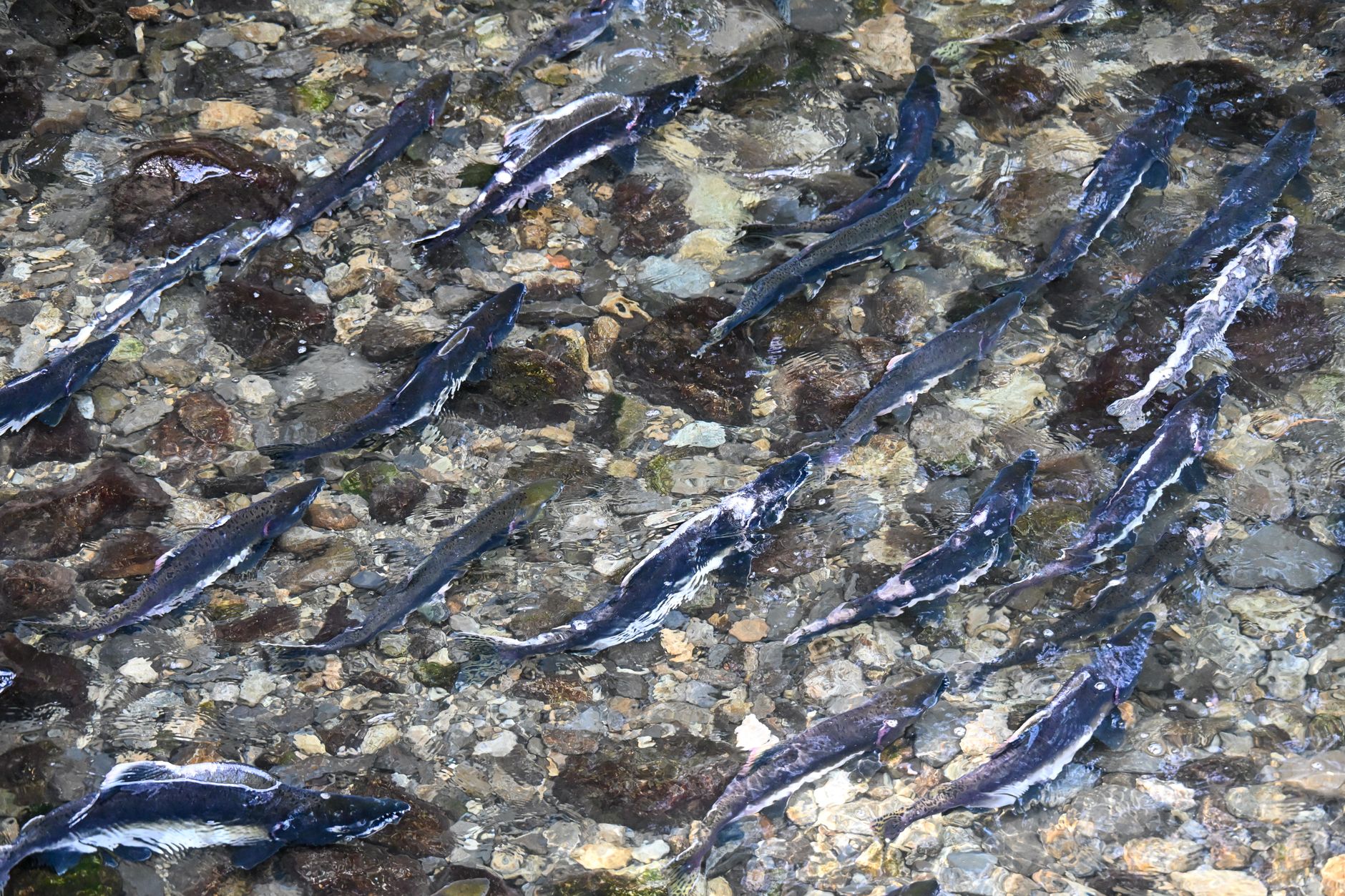
Chinook salmon returning to the Shuswap are going blind. Their eyes have turned cloudy; some have fallen out entirely. The Salmon River, historically a wide and cool waterway, has narrowed into a thin, warm channel. Blinded salmon are unlikely to survive long enough to spawn.
The crisis triggered emergency action: the province issued a protection order in July to limit irrigation in the region. Less than two weeks later, officials rescinded it, citing the interests of industrial water users intent on irrigating crops as wildfires loomed. The order was reissued August 19 after hundreds of Chinook arrived in the watershed. Whether this year's returning salmon will survive remains unclear.
The Salmon River runs northeast from plateaus west of Okanagan Lake to Shuswap Lake, surrounded by intensive water users including large ranches and farms. Historically low snowpack and precipitation in recent years have made water scarcity routine. Orders restricting Salmon River water access have become an almost yearly occurrence; this year's first order came with stream flows far lower than any previous year and weeks earlier in the dry season than usual.
Emergency orders in BC's water law were designed as a last-ditch lever when fish survival faces imminent risk. They are now being deployed on a regular basis across several watersheds as the province faces ongoing drought. In May, the Syilx Okanagan Nation Alliance—an alliance of six Okanagan First Nations—declared a "watershed emergency" across rivers in the region including the Salmon and Bessette watersheds.
Rosie Simms, director of place-based projects at the POLIS Water Sustainability Project at the University of Victoria, co-authored the report "Drought Ready: From Crisis Response to Community and Watershed Resilience in British Columbia." The report calls for a preventive approach to managing water in an era of increasing scarcity. "We can't be trying to fix drought in an emergency," Simms said. "There's a whole suite of things that would set us British Columbian communities up to be in a much better place to weather droughts and actually live well in drier conditions."
A Ministry of Water, Land and Resource Stewardship spokesperson said the "government has made preparing for drought conditions and responding to water scarcity a top priority, to safeguard the well-being of communities, businesses, ecosystems and wildlife" and is "working with partners on long-term, proactive solutions to improve water security in drought-prone watersheds."
How many spawning Chinook will survive to reproduce this year, and what will population recovery look like if returns fail for a second consecutive season?
What long-term water allocation rules will BC implement for the Salmon River and other drought-prone watersheds, and when?
We'll update this story as answers emerge.
