Why that red-light ticket came after a short yellow
Traffic engineers explain the science behind yellow-light timing — and why it can feel faster than it actually is.
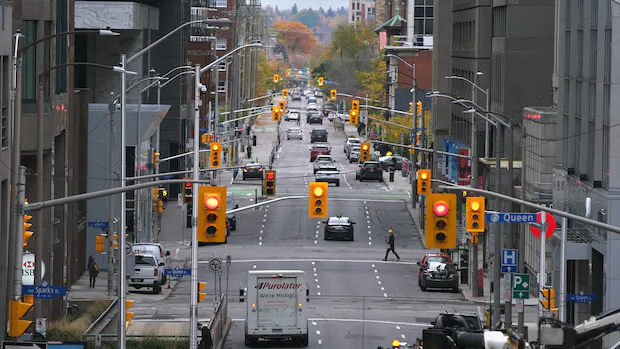
You're approaching an intersection. The light goes yellow. You have maybe two seconds to decide: brake or go. You go. Red-light camera flashes. Now you're holding a ticket and wondering: was that yellow light actually that short, or does it just feel that way?
Traffic engineers say there's real science behind what feels like a trap. Yellow light duration isn't arbitrary — it's calculated based on road speed, intersection geometry, and driver reaction time. But that calculation accounts for something most drivers don't think about: the fact that we all respond differently at the same moment.
The engineering standard works backwards from a few physical realities. A driver needs time to perceive the yellow light, decide what to do, and physically react — foot moving from gas to brake. That's typically 1 to 1.5 seconds. Add the time a vehicle needs to clear the intersection safely at the posted speed, and you get the duration. On a street with a 50 km/h limit, that might be three seconds. On a 40 km/h road, maybe 2.8 seconds.
What makes this feel deceptive is that engineers are calculating for the *average* driver and *average* conditions. But you might be going faster than the speed limit, or less attentive, or simply further back than you think. The yellow light was timed for someone else's reaction — and that creates the moment of doubt that leads people to run it.
Red-light cameras haven't changed that equation. They've just added consequence to a decision that was always split-second and uncertain.