Southern resident killer whale J31 spotted carrying dead calf off Vancouver Island
At 31 years old, J31 has suffered multiple reproductive losses. Researchers link failures to salmon scarcity and pollutants.
The day's top stories, food & events — every morning at 7. Unsubscribe anytime.
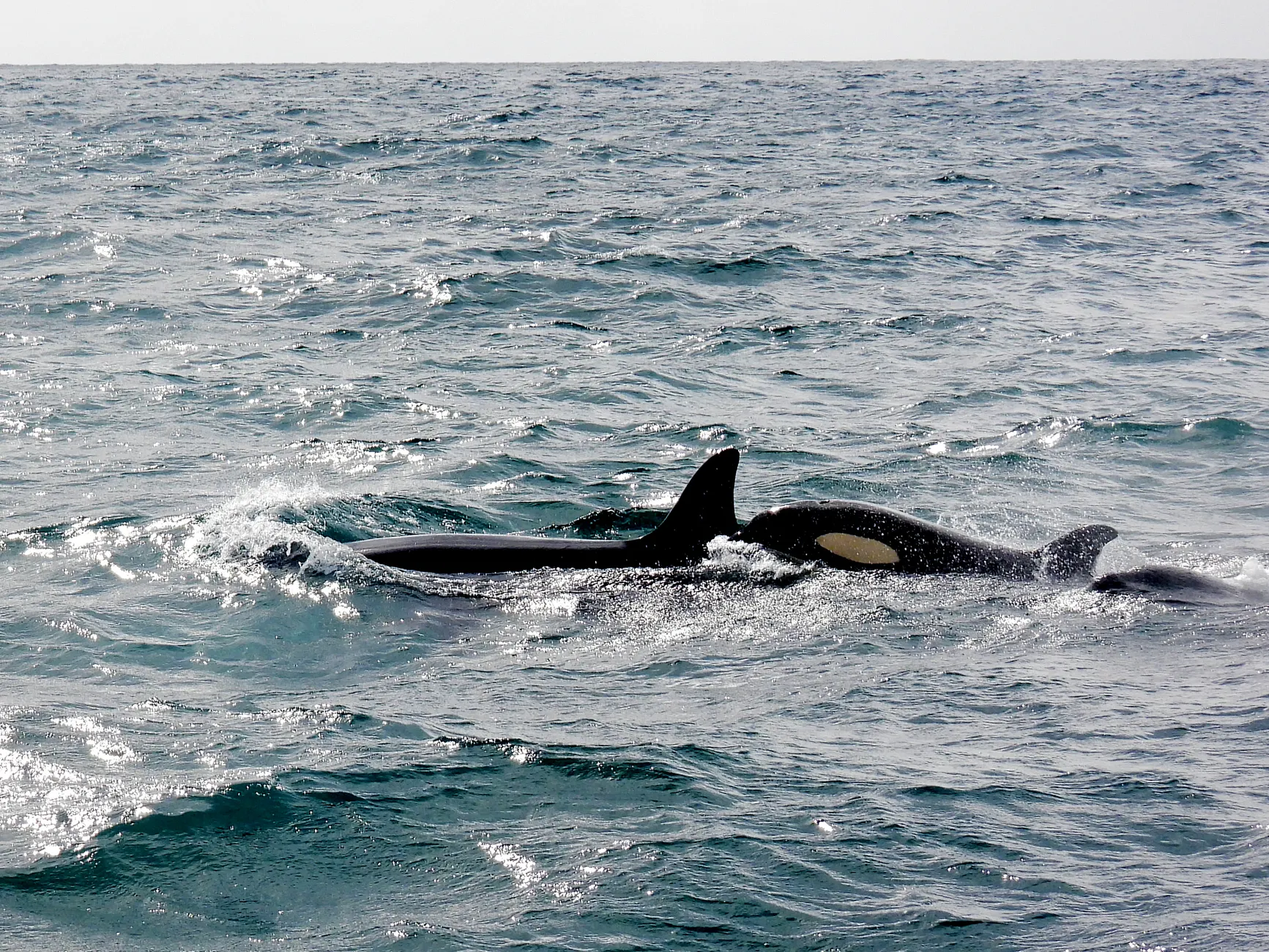
Southern resident killer whale J31 was spotted Saturday carrying a dead calf in the Strait of Juan de Fuca near Sombria Point, about 92 kilometres west of Victoria. The Center for Whale Research, a Washington-based organization, reported the sighting. The cause of the calf's death is unknown; researchers do not yet know the calf's sex or whether the pregnancy was carried to full term.
J31, now 31 years old, has a documented history of reproductive loss. The whale was previously spotted in 2016 carrying a dead calf. Michael Weiss, research director at the Center for Whale Research, said J31 "has had quite a few known failed pregnancies." Overall, about two-thirds of southern resident pregnancies fail to produce a surviving calf.
J31 has one surviving offspring—daughter J56, born in 2019—making every potential birth crucial for the endangered population. The southern resident population numbered 76 as of July 2026, nearly unchanged since 2001 when it was designated endangered. Over the past five years, the population has largely plateaued.
Researchers point to two interconnected pressures: declining Chinook salmon stocks and environmental toxins. Available salmon are smaller and less fatty than historical levels. "Moms especially need dietary fats to keep themselves healthy and raise their kids," Weiss said. Whales are also exposed to accumulating pollutants in their food chain that interfere with reproductive health. "That combination of not having enough to eat, and what food there is loaded up with these toxins, is what we think is leading to this low reproductive success and high infant mortality," Weiss said.
Orcas are pregnant for about 18 months, and females remain fertile until age 39. The situation echoes a 2018 case when J pod member J35 carried a dead calf for 17 days across more than 1,600 kilometres through the Salish Sea—an event that became known as the "tour of grief."
The facts
When and where was J31 spotted with a dead calf?
On Saturday, October 3, 2026, the killer whale J31 was spotted carrying a dead calf in the Strait of Juan de Fuca near Sombria Point, approximately 92 kilometres west of Victoria.
How many southern resident killer whales are there?
The southern resident population numbered 76 as of July 2026, and has remained nearly unchanged since 2001 when the population was designated endangered.
What are the main reasons for reproductive failures in southern resident killer whales?
Researchers attribute the failures to declining Chinook salmon stocks and environmental toxins. Available salmon are smaller and less fatty than historical levels, and whales accumulate pollutants through their food chain that interfere with reproductive health.
How many offspring does J31 have?
J31 has one surviving offspring, her daughter J56, who was born in 2019.
