Science World's dome becomes World Cup's signature image globally
The 41-year-old geodesic dome wrapped as a 40-metre soccer ball has appeared in over 100 news outlets worldwide, from the Financial Times to Chinese and Brazilian media.
The day's top stories, food & events — every morning at 7. Unsubscribe anytime.
Three years ago, when a trio of Vancouverites began kicking around the idea of wrapping Science World's dome as a soccer ball for the 2026 World Cup, they had no idea whether the vision was even possible. "At first it was kind of a joke," recalls Rob Hollingsworth, Science World's senior director of commercial sales and partnerships. "Like, 'Yeah, sure we should wrap the dome as a soccer ball!
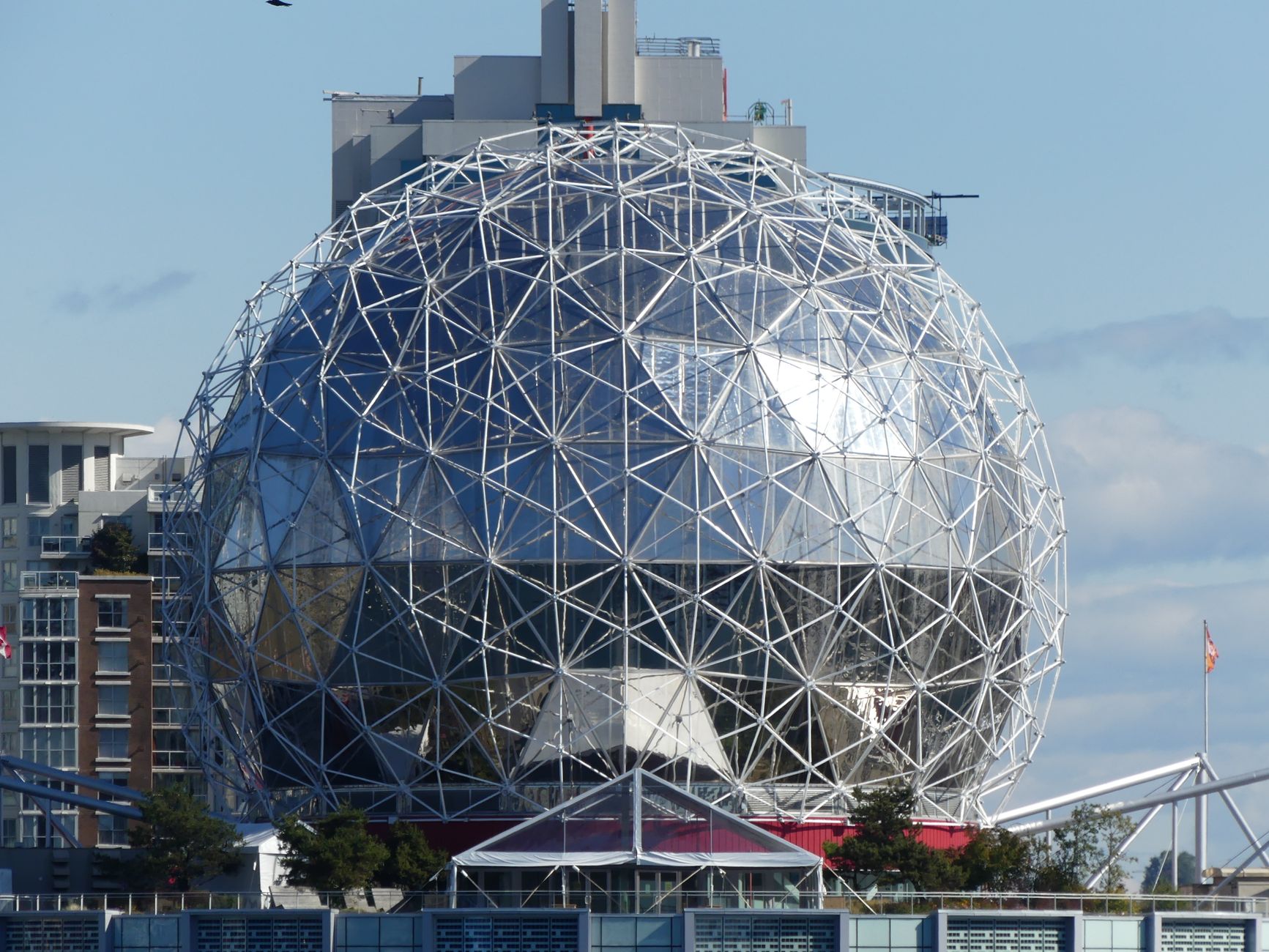
How the hell are we gonna do that?'" What began as a brainstorm has become one of the tournament's defining images. The transformation of the 41-year-old, 17-storey geodesic dome into a 40-metre-diameter, 360-degree re-creation of the Adidas Trionda—the 2026 World Cup's official match ball—is being called "The Beautiful Dome" and has already exceeded its creators' expectations. A photo ran above the fold on the front page of the Financial Times, the internationally read British newspaper.
The New York Times wrote about it this week. Images have been used to illustrate World Cup stories in Chinese, German, Brazilian, and Indian outlets, among many others. More than 100 news outlets worldwide have run a Reuters photo of the dome, said Vancouver branding expert Trina Notman.
"I really see this image as being the signature image for the World Cup, not just for Vancouver, but for the World Cup among all 16 host cities," Notman said. The dome also serves as the landmark for "The Last Mile," the approach where supporters march on game days from Science World north to BC Place Stadium. The concept came easily.
"Just look at the building, and you're like: 'Sure, that should be a football. Of course it should.'" But the hard part was securing permissions, funding, and executing the work. Science World's board had concerns.
"Our board was like: 'This is supercool, but is the dome going to roll down Terminal Avenue? What's gonna happen when you put all those panels on there?'" Hollingsworth said. Engineers ensured the project could be completed safely.
The Look Company, an Ontario-based firm with international experience creating innovative displays, was brought on board. A major challenge was that Science World lacked "as-built drawings"—blueprints showing exact dimensions after construction. They only had old hand-drawn blueprints from before the dome was built for Expo 86, which were "not usable for what we were trying to achieve," said Look Company CEO Jacob Burke.
They created a "digital twin" by scanning the entire structure with drones to learn its precise measurements. Engineers then designed 131 distinct panels, each slightly different in size and shape. "It fits like a tailored suit, not just something off the shelf," Burke said.
The B.C. government contributed $150,000. Most funding came from Destination Vancouver, a tourism industry organization not funded by taxpayers, and the Vancouver Hotel Destination Association. Destination Vancouver CEO Royce Chwin said they essentially diverted their World Cup activation budget to the project.
"When the Science World ball idea came across our desk, we liked it so much we scrapped some plans to allocate more of our budget towards the project." It was a gamble that paid off. Chwin noted there's no way Destination Vancouver could afford advertising to match the global exposure the dome has already generated. "It will remain an iconic shot for decades to come," he said. "I think we hit a base-clearing hit here—or a corner kick goal, if you will."
