Vancouver Fire Rescue hasn't measured whether East Van traffic barriers slow emergency response
VFRS says it consulted on design but has not conducted response-time analysis on traffic calming measures installed in Hastings-Sunrise neighbourhood, as residents petition for their removal.
HOC Exclusive · reported in response to questions HighOnCity put to the office named above.
The day's top stories, food & events — every morning at 7. Unsubscribe anytime.
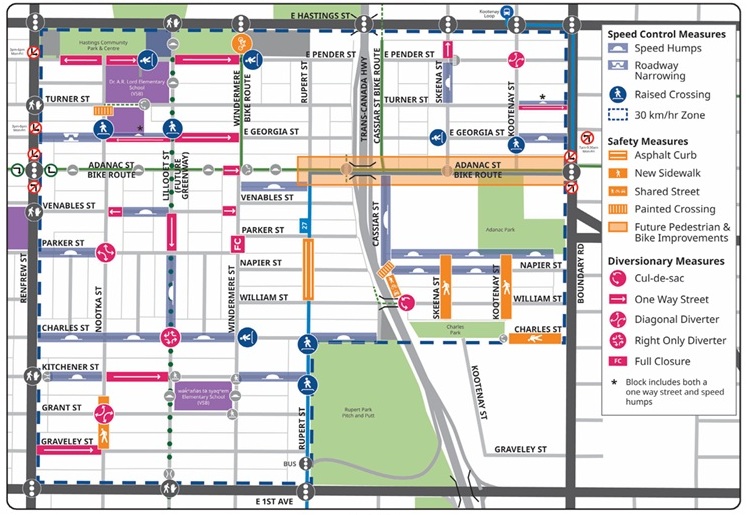
Vancouver Fire Rescue Services has not measured emergency response times in the Hastings-Sunrise neighbourhood since traffic calming measures—concrete barriers, diverters, and one-way streets—were installed, despite resident concerns that they impede fire, police, and ambulance access.
A group calling itself the East Van Traffic Coalition has launched a petition claiming the measures delay emergency services and divert traffic into back lanes and school zones. The petition, which the group says has passed 2,000 signatures, calls for removal of the barriers between 1st Avenue and Hastings Street, and between Nanaimo Street and Boundary Road. The coalition meets weekly and plans to raise the issue with candidates before the October 17 municipal election.
The City of Vancouver said the measures are part of the Hastings-Sunrise Traffic Calming Project, initiated over a decade ago in response to resident concerns about traffic shortcutting through the neighbourhood. The project was informed by two phases of public engagement in 2023, with a majority of residents who responded to phase 2 survey supporting it. Implementation occurred in phases: speed humps and signage in 2024–2025, one-way streets in January–February 2026, and remaining measures in May–June 2026.
Vancouver Fire Rescue Services told HighOnCity it was consulted during the design process to ensure emergency vehicle access and operational requirements were maintained under the Vancouver Building By-law and BC Fire Code. However, VFRS "has NOT measured response times in the area." The service said its review at the design phase and "the absence of identified emergency access concerns following implementation" meant the measures "did not warrant a dedicated response-time analysis." VFRS is "not aware of any systemic emergency access issues" but also "has not undertaken a formal review of crew reports specific to this project."
The City will collect vehicle speed and volume data in fall 2026 and make any required adjustments in early 2027. Staff may monitor and adjust, move, or remove measures based on that data.
Has VFRS collected informal reports from crew members about response challenges in the area since installation began?
What will the City do if fall 2026 speed and volume data show the measures are not achieving their traffic-calming goals?
We'll update this story as answers emerge.
The facts
What traffic calming measures were installed in Hastings-Sunrise?
Concrete barriers, diverters, and one-way streets were installed in phases between 2024 and June 2026 as part of the Hastings-Sunrise Traffic Calming Project.
Has Vancouver Fire Rescue measured response times since the barriers went in?
No. Vancouver Fire Rescue Services has not measured emergency response times in Hastings-Sunrise since the traffic calming measures were installed, though it was consulted during the design phase.
When will the city review the traffic calming project?
The City of Vancouver will collect vehicle speed and volume data in fall 2026 and make any required adjustments in early 2027.
How many signatures does the East Van Traffic Coalition's removal petition have?
The East Van Traffic Coalition's petition has passed 2,000 signatures and calls for removal of barriers between 1st Avenue and Hastings Street, and between Nanaimo Street and Boundary Road.
